

Scoop up any solids first, using a plastic scraper rather than your hands, then blot standing liquid with a towel without rubbing it deeper into the fibers. Crack the windows or run the fan on fresh air to clear fumes and protect yourself while you work. Pull on nitrile gloves before touching anything, then move to the full cleaning sequence below.
TL;DR:
- Use enzymatic cleaners and professional extraction tools to remove organic residues fully, preventing persistent odors and stains.
- Avoid using vinegar or harsh chemicals on leather and vinyl, and focus on appropriate cleaning methods for each material type.
- For blood or other fluids, treat as a biohazard with proper PPE and disinfectants, and consider professional help if contamination is extensive.
- Installing custom-fit all-weather liners can drastically reduce cleanup time by containing spills before they reach the carpet or padding.
Table of Contents
- Why Cleaning Vomit From Car Mats Fast Actually Matters
- What You Need Before You Start Cleaning Vomit From Car Interiors
- How to Clean Vomit Out of Car Mats Step by Step
- Cleaning Vomit From Different Car Mat and Seat Materials
- Getting Rid of Vomit Smell in Your Car for Good
- When to Call a Professional Detailer Instead of DIY
- Preventing Vomit Stains on Car Mats Before They Happen
- Why Smartliner-usa Built Its Liners Around This Exact Problem
- Handling Vomit That Contains Blood or Other Fluids
- Keeping Car Mats Clean and Stain-Free After the Fact
- A Quick, Honest Take on Cleaning Vomit From Cars
- Clean Up Fast, Then Stop Worrying About It Next Time
- Sources
Why Cleaning Vomit From Car Mats Fast Actually Matters
Vomit isn’t just an unpleasant mess. It carries gastric acid, bile salts, and digestive proteins that bond quickly with upholstery fibers, and that bonding is what turns a quick wipe-down into a permanent stain if you wait too long.
Heat speeds up the damage. A closed car on a warm afternoon can turn the cabin into a slow oven, and sunlight and high temperatures accelerate how deeply those acids set into carpet and foam. Every hour of delay lets volatile fatty acids travel further into the padding beneath your mats, which is exactly where surface cleaning stops working and deep contamination starts.
This is why wiping the top layer clean often isn’t enough. If the acid has already reached the foam backing or the OEM carpet underneath, you’re not dealing with a stain anymore. You’re dealing with a reservoir of odor that resurfaces every time the car heats up again. Extraction, not just wiping, is what actually pulls contamination out instead of pushing it further in.
What You Need Before You Start Cleaning Vomit From Car Interiors
Grab these before you touch anything, so you’re not mid-cleanup and realizing you’re short a supply:
- Nitrile gloves and a mask to keep bodily fluids off your skin and out of your lungs
- A plastic scraper or old spatula to lift solids without grinding them into carpet fibers
- Disposable bags to seal and remove solid waste immediately
- Microfiber towels (several, not one) for blotting and later drying
- An enzymatic cleaner as your primary weapon; it’s the most effective option for breaking down organic residue at the molecular level rather than just masking it
- Mild soap and water as a backup for non-leather surfaces if you’re out of enzyme cleaner
- White vinegar as a supplementary odor cutter on cloth and carpet, never on leather
- A wet-dry vacuum or portable extractor to pull moisture back out after treatment
- Baking soda and activated charcoal for absorbing whatever odor molecules remain once the wet work is done
If you only own one of these tools, make it the enzymatic cleaner. Soap and vinegar can mask smell temporarily, but they don’t digest the proteins causing it the way an enzyme formula does.
How to Clean Vomit Out of Car Mats Step by Step
Work through these stages in order. Skipping ahead, especially straight to scrubbing, is how odors end up locked in instead of removed.
- Contain and protect. Roll down windows or open doors to vent fumes, put on gloves, and if possible, move mats or removable panels to a well-ventilated space like a driveway or garage.
- Remove solids. Use the scraper to lift material up and away from the surface rather than pressing down, then bag it immediately and seal the bag.
- Blot excess liquid. Press clean, dry towels straight down onto the wet area and lift. Never rub in circles. Rubbing spreads contamination sideways into fibers that were otherwise untouched.
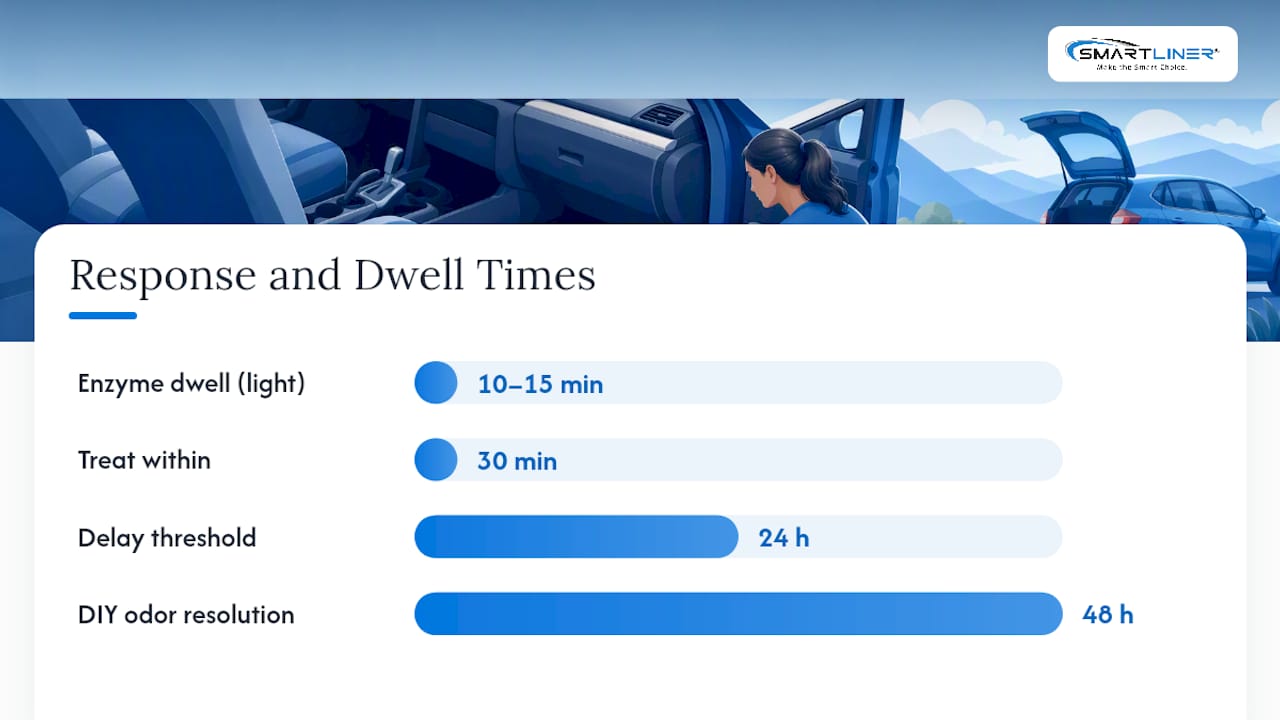
- Apply the enzyme cleaner. Saturate the affected area per the product’s label, then let it sit. Enzymatic formulas typically need somewhere between 10 and 15 minutes for light residue, but older or deeper stains can require several hours of dwell time to fully break down. Agitate gently with a soft brush partway through if the label allows it.
- Extract, don’t just wipe. A wet-dry vacuum pulls the loosened liquid and dissolved residue back out of the fibers instead of leaving it to soak deeper. This step separates a real fix from a temporary one; portable extractors are the most practical consumer tool for this, while professionals rely on truck-mounted hot-water extraction for the toughest jobs.
- Deploy odor absorbers and dry completely. Sprinkle baking soda over cloth surfaces, let it sit for a few hours or overnight, then vacuum it up. Leave activated charcoal in the cabin with windows cracked. Confirm the mat and surrounding carpet are bone dry, not just dry to the touch, before you reinstall anything.
Pro Tip: Press a dry white towel into the treated spot after extraction. If it comes away with any dampness or discoloration, the area isn’t finished. Repeat the extraction step rather than reinstalling a mat over hidden moisture.
Acting within the first half hour makes a real difference here. When the affected area is small and treated fast, DIY enzymatic cleaning typically resolves odor within 48 hours. Delays beyond about a day may require professional equipment for full remediation.
Cleaning Vomit From Different Car Mat and Seat Materials
Not every surface in your car responds to the same treatment, and using the wrong method on the wrong material can set a stain instead of removing it.
- Cloth and carpeted mats: Blot first, apply enzyme cleaner, extract, then finish with a baking soda pass once dry. These fibers absorb the fastest, so speed matters more here than anywhere else in the car.
- Rubber and all-weather mats: Pull them out of the car entirely, hose them off outside, scrub with mild detergent and a stiff brush, disinfect if needed, and let them air dry completely before reinstalling. Removable rubber mats simplify this dramatically compared to fixed carpet, since you can rinse them like a dish rather than treating them in place.
- Leather and vinyl: Skip harsh enzymatic formulas and acidic adjuncts like vinegar. Use a dedicated leather cleaner, work in small sections, and follow with a conditioner so the material doesn’t dry out or crack.
- Seatbelt webbing and headliner fabric: Use minimal moisture and test any cleaner on a hidden patch first. These areas dry slowly and trap odor easily, so if contamination has soaked in deeply, this is a case where calling in professional help beats risking further damage.
Getting Rid of Vomit Smell in Your Car for Good
A stain you can see. Odor is the part that lingers after everything looks clean, and it’s almost always a chemistry problem rather than a cleaning-effort problem.
Enzymatic cleaners work by digesting the organic molecules causing the smell rather than covering them up, but they need contact time to finish the job. Give the product its full dwell time and repeat the application on older or heavier incidents rather than assuming one pass is enough.
- Sprinkle baking soda over damp (not wet) cloth areas and let it draw out volatile compounds overnight
- Set out activated charcoal in an open container to absorb airborne odor molecules over several days
- Vacuum up all absorbent residue thoroughly; leftover powder trapped in fibers can attract more moisture later
- Avoid parking in direct sun or blasting the heater while odor treatment is underway, since heat bakes proteins deeper into fabric instead of releasing them
- Reserve oxidizers and ozone treatments for professional use only; these are effective but require ventilation controls and equipment most home garages don’t have
Baking soda and charcoal absorb odor, but neither replaces the enzyme and extraction work that removes the source. Treat them as the finishing step, not the main event.
When to Call a Professional Detailer Instead of DIY
Some situations are worth handing off. If odor persists after a proper enzyme treatment and full extraction, the contamination has likely gone deeper than a home cleanup can reach.
- Vomit that’s been sitting for more than 24 to 48 hours, since it’s had time to penetrate padding and underlayment beneath the mat
- Any contamination near electrical connectors, seat motors, or HVAC ducts, where moisture risks more than just odor
- Odor that returns within days of a cleanup you were confident about
Professionals bring tools most households don’t have on hand, including truck-mounted hot-water extraction, thermal fogging, and in severe cases ozone treatment that reaches contamination trapped in foam and ductwork. Expect costs somewhere in the $150 to $400 range depending on severity, and know that many detailers charge a separate fee for biological cleanup on top of a standard interior detail.
Preventing Vomit Stains on Car Mats Before They Happen
The fastest cleanup is the one you never have to do. Keep a small kit in your trunk or glove box so you’re never caught without supplies:
- Paper towels and a roll of disposable bags
- Travel-size enzyme spray
- Disposable gloves
- A collapsible bucket or bowl for motion-sick passengers to use before, not after
For short-term protection, removable rubber mats and seat covers give you something you can pull out and hose off rather than scrub in place. For a long-term fix, custom-fit all-weather liners change the math entirely. Instead of liquid soaking into carpet fibers and OEM padding, it stays contained on a raised, textured surface designed to hold it until you dump it out. Preventive use of custom-fit liners reduces interior exposure and shortens cleanup time dramatically compared to relying on factory carpet alone, which is exactly why they’ve become standard gear for rideshare drivers and parents of carsick kids alike.
Why Smartliner-usa Built Its Liners Around This Exact Problem
Smartliner-usa engineers every liner using precise-fit technology and 100% recyclable materials, so the mat matches your vehicle’s floor pan down to the contour instead of sitting loose like a universal rubber sheet. That precision is what creates the raised lip and channel design that actually contains a spill rather than letting it run off the edge onto carpet.
- Custom-fit liners built from durable, all-weather material designed for spill containment
- Recyclable construction that holds up to repeated washing without cracking or fading
- A design built for quick removal, so cleaning after an incident takes minutes, not an hour of scrubbing carpet
- Author perspective from Marty, drawing on the vehicle protection and interior care research behind this guide
Handling Vomit That Contains Blood or Other Fluids
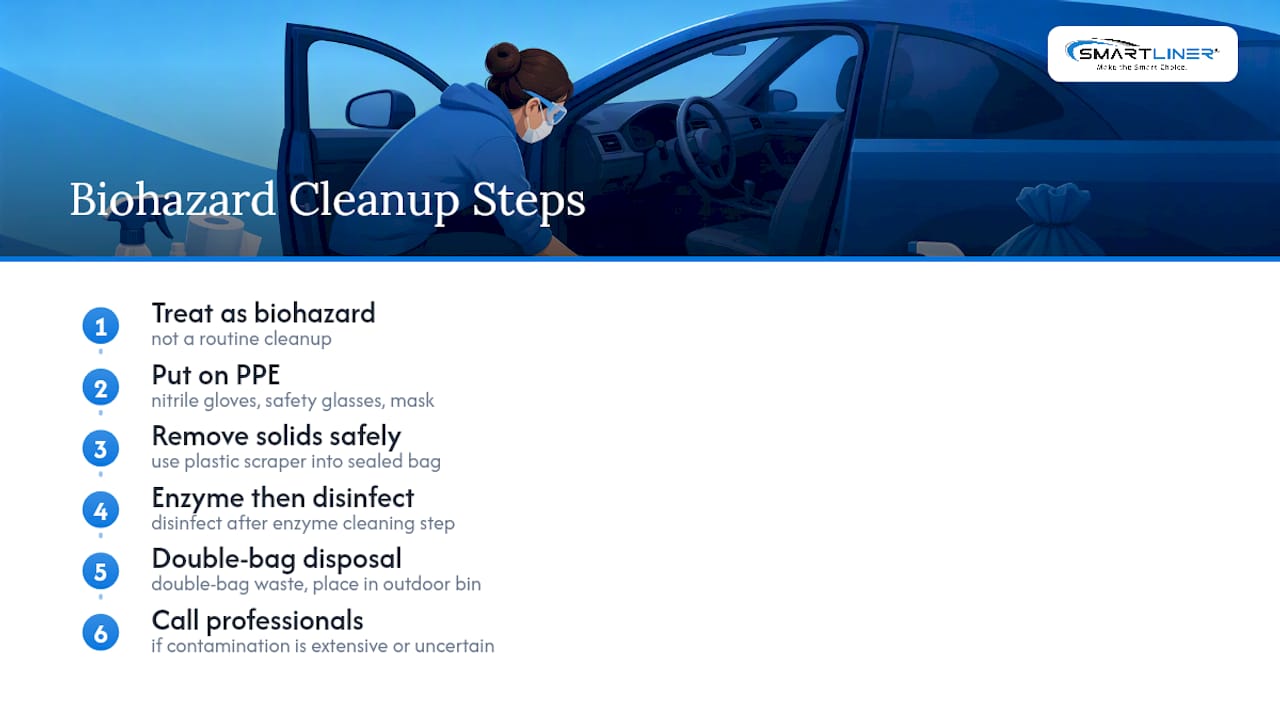
Treat any vomit mixed with blood as a biohazard, not a routine cleanup. This changes both your protective gear and your disposal method, and skipping the extra caution here isn’t worth the risk.
Put on nitrile gloves and, if you have one, safety glasses before you approach the area. A mask helps limit exposure to airborne particles, especially if you’re working in an enclosed cabin. Use a plastic scraper rather than your hands to lift solids directly into a sealed plastic bag, and avoid any motion that could splash material onto your skin, clothing, or nearby surfaces.
Disinfect the area with an EPA-registered disinfectant after the enzyme cleaning step, not instead of it. The enzyme breaks down the organic material; the disinfectant addresses pathogens the enzyme formula isn’t designed to kill. Double-bag any solid waste and disposable materials like paper towels or gloves before placing them in an outdoor trash bin, never a bin that will sit inside a garage or living space.
Wash your hands thoroughly with soap and water immediately after removing gloves, even if nothing visibly touched your skin. If the contamination is extensive, or if you’re uncertain how deep it penetrated into padding, this is a case where a biohazard remediation service is worth the cost over a DIY attempt. Some situations genuinely call for equipment and training beyond what a home cleanup kit can safely handle.
Keeping Car Mats Clean and Stain-Free After the Fact
A mat that’s been treated for vomit needs a bit of follow-up care, or the smell and staining can creep back weeks later even though everything looked fine at the time.
Check the mat again after 48 hours in normal use. Warm weather or a closed cabin can reactivate trace residue you missed, so a second light pass with your enzyme cleaner is cheap insurance if you catch any faint smell returning. Vacuum mats weekly for the first month after an incident; loose baking soda or charcoal dust left behind attracts moisture and can create a musty smell that mimics the original problem.
Rotate in a spare set of mats if you have one, so the treated set gets uninterrupted time to fully dry and off-gas any remaining cleaner scent. Avoid heavy fabric fresheners or scented sprays directly on the treated area for the first week or two. They mask smell rather than address it, and they can make it harder to tell if the underlying odor is actually gone. For general upholstery and dashboard upkeep between incidents, a routine interior cleaning process keeps surfaces from building up the grime that makes future stains harder to spot early.
If your mats are removable rubber or all-weather liners, hose them off outside every few weeks regardless of whether anything happened. Regular rinsing prevents the slow buildup of odor-causing residue that eventually needs a full enzyme treatment to reverse.
A Quick, Honest Take on Cleaning Vomit From Cars
Speed and the right chemistry beat every home remedy you’ll find in a forum thread. An enzyme cleaner followed by real extraction, not just blotting, is the difference between a smell that’s gone in two days and one that haunts your car every summer afterward.
If there’s one shortcut worth building into your routine, it’s keeping a spare set of removable rubber mats in the trunk. Swap them in, treat the soiled set at home without rushing, and you’ve turned an emergency into a minor inconvenience. That’s the same logic behind investing in liners built to contain a mess in the first place rather than absorb it.
— Marty
Clean Up Fast, Then Stop Worrying About It Next Time
A hosed-off rubber liner beats a soaked carpet mat every time, and that’s the whole case for switching. Smartliner-usa liners rinse clean with a garden hose and mild soap, air dry in under an hour, and snap back into place without the fitting hassle of a universal mat. The raised edge channels do the real work: liquid pools on the surface instead of soaking into carpet or foam padding underneath, which means the cleanup you just read about becomes a five-minute job instead of an afternoon.
If you’re outfitting a family vehicle, the Dodge Grand Caravan and Chrysler Town & Country liners are built for exactly this kind of spill-heavy use, with an alternate fit option available if your model year needs it. Passat owners can check the custom-fit liner for the 2012-2019 Volkswagen Passat built specifically for that floor pan. Browse your vehicle’s fit and get a set ordered before the next road trip, not after the next mess.
Sources
- How to Get Vomit Smell Out of Car — Car Care Total
- How to Get Vomit Out of Car Interior & Remove Smell - CarXplorer
- Clean Vomit in a Vehicle - Bio SoCal
Recommended
- SMARTLINER Floor Liners for 2019-2026 Volkswagen Jetta | Smartliner USA
- SMARTLINER Floor Liners for 2018-2026 Atlas ((2nd Row Bench)) | Smartliner USA
- SMARTLINER Custom Fit Floor Liners For 2009-2012 Toyota Venza | Smartliner USA
- SMARTLINER Floor Liners for 2018-2024 Volkswagen Tiguan (7 Passenger) | Smartliner USA