

Stop the mud before it spreads: dry your dog with a towel, brush off loose clumps with a boot brush, and set a liner or seat cover in place before your dog gets in. Those two moves, removal first and protection second, prevent most of the damage that turns a quick trip into an hours-long cleanup.
TL;DR:
- Properly drying and brushing off a muddy dog outside the vehicle prevents most mud from spreading to car upholstery.
- Custom-fit liners with raised edges and secure anchoring significantly reduce mud transfer compared to universal mats.
- Let dried mud fully set before vacuuming or spot-treating to avoid pushing grime deeper into fabrics or causing stains to wick moisture.
- Using enzymatic cleaners and enhanced airflow helps eliminate odor and moisture caused by wet fur and mud inside the car.
- Building a dedicated grooming and cleaning kit, including liners, towels, and brushes, speeds up cleanup and helps prevent recurring messes.
Table of Contents
- Immediate Steps for a Muddy Dog in the Car
- Which Seat Covers and Liners Actually Stop Mud Transfer?
- How to Clean Dried Mud Out of Seats and Mats
- Drying Your Car and Getting Rid of Wet-Dog Smell
- Build a Kit So This Stops Being a Recurring Chore
- Why Smartliner Liners Hold Up to Muddy Dogs
- Getting Your Dog Ready Before the Ride
- Post-Ride Grooming That Keeps the Mess Contained
- Cleaning Products That Are Safe Around Pets and Tough on Mud
- An Editorial Note on Muddy Dogs and Car Care
- A Practical Next Step for Muddy-Dog Owners
- Sources
Immediate Steps for a Muddy Dog in the Car
Work outside the vehicle whenever you can. Mud that dries on a driveway brushes off in seconds; mud that gets smeared across upholstery takes a full cleaning cycle to undo.
- Let the worst mud dry for a few minutes if you have time. Dried clumps lift off with a brush far more easily than wet ones smear.
- Brush off loose debris with a boot brush or stiff-bristled dog brush, working from the paws upward.
- Towel-dry the legs, belly, and paws. Keep a dedicated towel in the car for this and nothing else.
- Use a portable rinse only if the mud is thick and won’t brush free. A quick paw dunk in a collapsible bowl beats a full hose-down in most cases.
- If no water is available, disposable wipes or an absorbent pad under the paws works as a stopgap.
Pro Tip: Keep a plastic grocery bag in your glove box. Slide it over each muddy paw like a sock while you towel the rest of the dog, then peel it off right before your dog steps onto the seat.
Watch your dog while you do this. A low, neutral, calm tone works better than frantic cooing at settling a dog that’s anxious about the toweling process, and it keeps you from adding stress to an already unpleasant moment for both of you.
Which Seat Covers and Liners Actually Stop Mud Transfer?
Coverage decides everything here. A universal seat cover that drapes over the bench looks protective but leaves gaps at the door sills and floor where paws and mud slip right past the edges. A hammock-style cover closes some of that gap by connecting to the front seatbacks and door panels, which works well for dogs riding in the back seat.
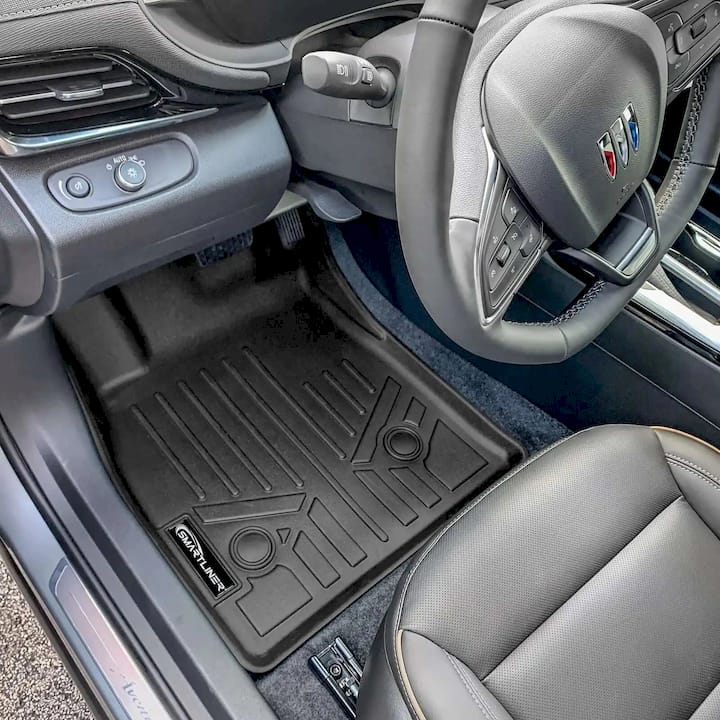
Custom-fit cargo and floor liners close the remaining gaps because they’re built to a specific vehicle’s contours rather than a generic bench shape. Liners engineered around door sills, footwells, and seat channels reduce the edges where mud typically migrates, and a raised lip keeps loose mud and water from running onto carpet.
The back seat or a dedicated cargo area is usually the safer placement for a dog anyway, away from airbags and with steadier footing during braking. When you’re installing coverage, check for:
- Secure anchor points so the liner doesn’t slide when your dog shifts weight
- A non-slip underside that stays put on hard flooring
- Full removability, so you can pull it out and hose it down instead of scrubbing it in place
- Raised edges tall enough to contain splashback from wet paws
Floor liners and cargo liners built around this exact logic provide full-tray coverage instead of a flat mat that mud can slide off of.
How to Clean Dried Mud Out of Seats and Mats
Resist the urge to wipe wet mud away. Mud that’s wiped while wet spreads into fibers instead of lifting off; letting it dry completely first is the counterintuitive step that actually makes cleanup faster.
- Let the mud dry fully, even if it takes a few hours.
- Vacuum with an upholstery attachment, working from the outside edge of the stain toward the center so you’re not pushing dirt deeper into the fabric.
- Spot-treat remaining marks with a mild, interior-safe cleaner and a soft-bristled brush, testing on a hidden patch first.
- For rubber or thermoplastic liners, pull them out and scrub with warm soapy water; pressure washing works for heavy caked-on mud and salt, but skip protectant sprays that leave a slippery film near the pedals.
- For fabric seats, blot rather than scrub. Aggressive agitation can push staining deeper into the weave.
One detail most owners miss entirely: a stain that looks gone on the surface can still be wicking moisture through the padding underneath. If a stain keeps reappearing after cleaning, or a cushion feels damp days later, that’s usually a sign the padding is saturated and a professional detailer with extraction equipment will get better results than another round of spot cleaning.
Drying Your Car and Getting Rid of Wet-Dog Smell
Wet mud and wet fur together are basically an odor factory, and the fix starts with airflow, not air freshener. Point the AC or a portable fan directly at the area your dog occupies, and pre-cooling the cabin before your dog gets in reduces the heat stress that makes wet-dog smell worse in the first place.
- Use an enzymatic cleaner on any spot that had direct contact with mud or drool. Enzymatic formulas break down the organic matter causing the smell instead of just masking it.
- Sprinkle baking soda over fabric seats and carpet, let it sit for an hour or more, then vacuum it up.
- Check for hidden moisture with a palm press. Foam padding can hold water well after the surface feels dry, and skipping this step is how mold problems start.
Pro Tip: Crack the windows for ten minutes of active ventilation before you start cleaning. It clears trapped humidity fast and keeps enzymatic cleaner smells from lingering.
Build a Kit So This Stops Being a Recurring Chore
A small, dedicated kit turns a 30 minute cleanup into a 5 minute wipe down.
- Two absorbent towels, kept in the car and used for nothing but the dog.
- A boot brush or slicker brush for loose mud and dried clumps.
- A pack of disposable wipes for a fast paw check between longer cleaning sessions.
- Seat anchors or a hammock cover that stays installed permanently.
- A travel water bottle and no-spill bowl, useful for both drinking and a quick paw rinse.
- A small first-aid towel, separate from the cleanup towels, for cut pads or scrapes.
Pair the kit with a routine: wipe paws after every walk, trim paw fur seasonally so it collects less mud, and do a 30-second towel check before your dog jumps in. On the road, pre-cool the cabin, lay your liner before loading up, wipe paws one more time at the door, and build in a stop every couple of hours for a stretch and a quick mud check.
Why Smartliner Liners Hold Up to Muddy Dogs
Custom-fit coverage is the difference between a liner that contains mud and one that just moves it around. Some manufacturers build floor liners and cargo liners around laser-scanned vehicle contours, so the tray follows specific footwell, sill, and seat channel shapes instead of approximating a generic shape.
- All-weather, recyclable material that handles standing water and dried mud without warping.
- Raised edges that contain splashback instead of letting it run onto carpet.
- A fit designed to stay anchored during sudden stops instead of sliding.
- A surface that wipes or hoses clean in minutes, since mud sits on top of the liner rather than soaking into carpet fibers underneath.
Users who switch from a flat universal mat to a full-tray liner often find it reduces cleanup time, making it easier to pull the liner out and rinse it off.
Getting Your Dog Ready Before the Ride
A few minutes of prep before your dog even reaches the car door prevents most of the mess you’d otherwise be cleaning up an hour later. Start with a paw check right where your walk ends, ideally at a door mat or gravel patch instead of straight from grass or trail mud onto pavement.
Keep a small basin or bucket by your entry point during muddy seasons. A quick dunk and towel-off for each paw, done before the leash comes off, catches the bulk of what would otherwise transfer straight to your seats. If your dog tolerates it, a damp cloth run along the belly and legs catches splashback that paw cleaning alone misses, especially on dogs with longer coats that trail through puddles.
Timing matters more than people assume. Cleaning a dog immediately after a muddy walk is far easier than waiting until you’re back home, because fresh mud hasn’t had time to work into the coat. If you know a walk is going to be muddy going in, consider a quick trim around the paw pads and lower legs beforehand. Shorter fur there picks up dramatically less mud and dries faster once you do towel off.
Build the check into your routine rather than treating it as an extra step. A dog that’s used to a 60-second paw wipe before car time will usually stand still for it without a fuss, which makes the whole process faster every single time.
Post-Ride Grooming That Keeps the Mess Contained
The cleanup doesn’t stop when you get home. What you do in the ten minutes after a muddy outing determines how much mud ends up baked into your car’s interior by the next trip.
Brush your dog out fully before letting them settle anywhere in the house or car again. A slicker brush or undercoat rake pulls out dried mud flakes that a plain hand pass would leave behind. For dogs with feathering on the legs or tail, a comb works better than a brush at separating matted, muddy sections without pulling.
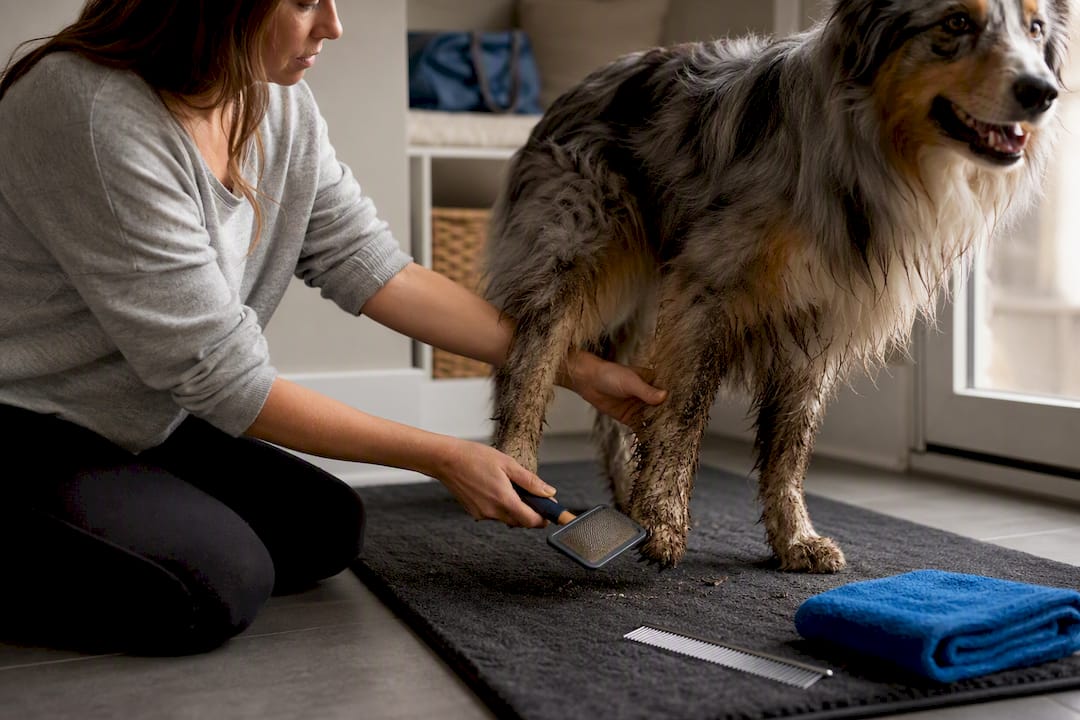
If mud has dried into the coat, resist bathing immediately. Let it dry completely first, then brush it out. Wet mud worked with water during a bath tends to spread into the undercoat rather than lifting away, the same principle that applies to mud on car upholstery.
Pay particular attention to paw pads and the fur between toes. That area holds moisture and mud longer than anywhere else on the body, and it’s usually the first point of contact with your car’s floor. A quick trim of the fur between pads, done every few weeks during muddy months, cuts down significantly on how much debris gets trapped there in the first place.
Cleaning Products That Are Safe Around Pets and Tough on Mud
Not every automotive cleaner belongs in a car that a dog rides in regularly. Look for interior cleaners labeled pet-safe or free of harsh solvents, since residue on seats and mats ends up on paws and fur during the next ride.
For upholstery and carpet, a mild enzymatic cleaner handles both mud stains and the odor mud leaves behind, since it breaks down organic residue rather than just covering the smell. Plain warm water and dish soap remains one of the most effective, lowest-risk options for scrubbing rubber and thermoplastic liners, and it avoids the slippery residue that some specialty protectant sprays leave near the pedals.
Keep a soft-bristled brush on hand specifically for spot-treating fabric, since anything stiffer risks fraying the weave. A handheld vacuum with an upholstery attachment earns its place in the kit too. It reaches into seat seams and floor channels that a full-size vacuum’s hose can’t get into cleanly.
For general interior surfaces beyond the seats, a dashboard and trim cleaning guide covers the products and techniques that keep the rest of the cabin looking as good as the floor once the mud’s handled. Store everything in one bin near the door you use most for dog walks. Reaching for cleaner shouldn’t be the reason mud sits for an extra hour.
An Editorial Note on Muddy Dogs and Car Care
The fastest way to stop mud from becoming a problem is refusing to let wet mud touch fabric in the first place, everything else is just damage control after that decision’s already been made. The habit that’s actually saved me the most cleanup time isn’t a product at all: it’s keeping one towel reserved solely for the dog, never grabbed for anything else, so it’s always exactly where I need it.
— Marty
A Practical Next Step for Muddy-Dog Owners
Cleaning kits and quick wipes handle the aftermath, but the real fix is stopping mud before it reaches your upholstery at all. Smartliner-usa’s custom-fit floor liners are built around your exact vehicle’s footwell and sill contours, so there’s no gap for a wet paw to slip past and no flat mat sliding out of place during a sharp turn.
If your dog rides in the back of an SUV or a cargo bay, a purpose-built cargo liner like the Land Rover Discovery Sport cargo liner contains mess in one contained tray instead of letting it spread across carpet. Off-road or farm dogs riding along in a UTV or truck bed get the same coverage logic from the UTV floor mats and truck bed mat liners, both built from the same all-weather, recyclable material that hoses clean in minutes.
Find your exact model on the Smartliner-usa product catalog and get the fit that actually matches your vehicle’s floor.