

For most owners who plan to keep a vehicle longer than a year, premium custom all-weather floor liners are worth the cost. They stop irreversible carpet stains, cut cleaning time to minutes, and hold their shape through winter salt and summer heat. The exceptions are drivers with short-term leases in dry climates, or anyone who prizes plush carpet feel over practical protection.
TL;DR:
- Custom-fit liners that follow your vehicle’s contours provide superior protection for sidewalls, footwells, and ridges, especially in SUVs with high foot traffic.
- TPE material offers better temperature resistance and shape retention than softer rubber compounds that may curl, emit odors, or trap moisture over time.
- Proper installation ensures the liners stay anchored, preventing pedal interference or safety hazards caused by shifting or unsecured mats.
- The payback for premium liners is most evident with long-term vehicle use in messy conditions, as they prevent costly carpet replacement and protect resale value.
- Short-term, dry-climate drivers with low usage may find universal mats sufficient, as the primary containment benefits do not justify the higher upfront cost.
Table of Contents
- What Are the Pros and Cons of Floor Liners?
- Do TPE and Rubber Materials Actually Hold Up?
- How Much Coverage Do You Actually Need?
- What’s the Real Cleaning and Maintenance Routine?
- Do Floor Liners Actually Pay for Themselves?
- When Are Premium Liners Overkill?
- What Should You Check Before You Buy Floor Liners?
- How Do You Install Floor Liners Safely?
- Is Smartliner a Practical Match for This Checklist?
- An Editorial Take: Endorsed, With One Caveat
- Ready to Protect Your Vehicle’s Interior?
- Sources
- FAQ
What Are the Pros and Cons of Floor Liners?
Floor liners solve a specific problem: carpet cannot contain liquid, and it cannot be hosed clean. A raised lip around the perimeter of a quality liner traps snowmelt, coffee, and mud inside a molded tray instead of letting it soak into the padding underneath. That containment is the single biggest functional advantage over a flat mat, and it’s why long-term gear tests from Car and Driver consistently rank custom-fit liners above universal mats for both fit and cleanup.
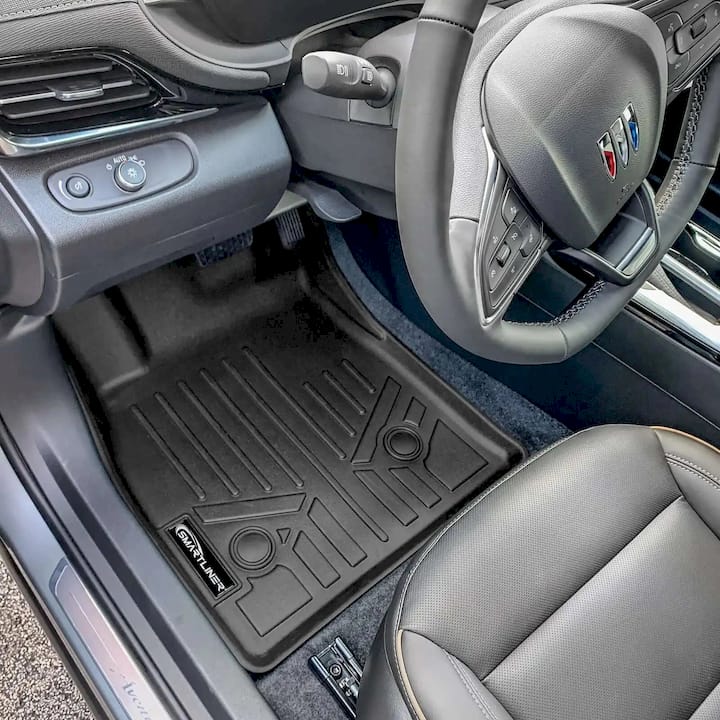
Here’s how the trade-offs break down in practice:
Pros:
- Raised-lip edges contain spills, slush, and pet accidents before they reach carpet fibers
- Edge-to-edge coverage protects sidewalls and footwells that flat mats never touch
- Cleaning takes a garden hose and a few minutes instead of a shampooer and an afternoon
- A parent hauling soccer cleats and spilled juice boxes gets a tray to dump out, not a stain to scrub
Cons:
- Premium sets cost more upfront than a set of universal rubber mats from a parts store
- The firmer surface feels different underfoot than factory carpet, which some drivers notice immediately
- Certain rubber compounds carry a faint odor when new or curl slightly in extreme cold
- A driver who only uses their car for short, dry commutes may never generate enough mess to justify the cost
None of these trade-offs are dealbreakers for most buyers, but the tactile shift is real. If you like the feel of soft carpet under your shoes, a hard-shell liner takes some adjustment. The upfront cost is the other genuine friction point, and whether it clears that bar depends heavily on how long you keep the vehicle and how hard you use it, which the next few sections unpack.
Do TPE and Rubber Materials Actually Hold Up?
Material choice determines almost everything about how a liner ages. Thermoplastic Elastomer, known as TPE, has become the material of choice for premium liners because it resists temperature swings without turning brittle in winter or soft and sticky in summer heat. Road & Track’s tested roundup found that molded, vehicle-specific liners made from rigid compounds like TPE outperform flat rubber mats on both structural stability and liquid containment.
Softer rubber compounds feel more cushioned underfoot, which some drivers prefer, but that flexibility comes at a cost. Softer mats are more prone to curling at the edges over time, and lower-grade rubber can trap moisture against the carpet if it doesn’t sit flat. Some cheaper rubber blends also develop an odor after repeated heat cycles in a closed cabin.
Watch for a few warning signs when you’re evaluating a liner before purchase:
- A liner that flexes so much it doesn’t hold its molded shape on a flat surface
- Seams or edges that already show separation in a brand-new product
- No stated material spec at all, which usually means the seller doesn’t want you comparing it
A trustworthy warranty is one of the best proxies for durability you’ll find before you actually own the product. If a brand backs its liners for multiple years against cracking or fading, that’s a signal the manufacturer trusts its own material blend. Vague “satisfaction guaranteed” language with no defined term is a softer commitment than a defined warranty period.
How Much Coverage Do You Actually Need?
This is where the real gap between universal and custom liners shows up, and it’s bigger than most first-time buyers expect. A universal mat is a flat rectangle trimmed to roughly fit your floor. A true custom liner is laser-measured to your exact vehicle, model year, and trim, which means it follows the contours of your specific floor pan instead of approximating them.
Before you buy, check that a liner covers these areas:
- The footwell sidewalls, not just the flat floor, since splashes hit the walls of the footwell as often as the floor itself
- The dead pedal area, the resting spot left of the brake pedal that universal mats routinely leave exposed
- Rear footwells and the center hump, especially in SUVs where kids and pets generate most of the mess
- Any raised carpet ridges or drivetrain humps, which a laser-measured liner molds around instead of sitting awkwardly on top of
Buyer guides note that custom liners frequently extend up the sidewalls and around footwell humps in a way universal mats simply cannot, since a one-size-fits-many mat has to stay flat to fit multiple vehicles.
Retention matters just as much as shape. Every liner should lock to the factory anchor points in your floor, whether that’s a molded hook, a twist-lock post, or a factory grommet. A liner that isn’t anchored can slide forward under braking and interfere with the pedals, which is a safety issue, not just an annoyance. Confirm the retention hardware matches your specific trim before you order, since anchor placement varies even within the same model across years. For a deeper breakdown of how custom fit differs from universal trimming, this buyer’s guide to floor liners walks through the fit differences in more detail, and SUV owners in particular should pay attention to rear-seat coverage, where universal mats fall shortest.
Once your liners arrive, sit in the driver’s seat and cycle the pedals through their full range with the liner installed. Press down on each anchor point and check for lateral shift. A properly fitted liner shouldn’t move more than a quarter inch under load.
What’s the Real Cleaning and Maintenance Routine?
The maintenance shift is the part owners notice fastest, often within the first week. Instead of blotting a coffee stain into carpet fibers and hoping it lifts, you pull the liner out, shake it off, and hose it down. Car and Driver’s testing lists this remove-hose-dry cycle as the main reason liners outperform carpet mats on cleaning speed.
A basic routine looks like this:
- Pull the liner out and shake off loose debris after muddy or snowy trips
- Hose it down with plain water for everyday grime, or a mild degreaser for oil and road grease
- Let it air dry fully before reinstalling, ideally propped at an angle so water doesn’t pool in the tray
- Wipe down anchor points occasionally so grit doesn’t build up around the retention hardware
Salt is the trickiest contaminant because it doesn’t just sit on the surface, it works into any texture and keeps drawing moisture. Rinsing liners promptly after winter driving, rather than letting salt residue dry and re-crystallize, prevents the white haze that’s tough to fully remove later. Grease from work boots or bike chains responds best to a degreaser rinsed clean immediately rather than left to set.
Pro Tip: Never reinstall a liner while it’s still damp underneath. Trapped moisture between a liner and factory carpet can cause mildew odor even though the liner itself is dry on top.
Plan on a deeper clean, using a soft brush and mild soap, every few weeks if you drive daily in messy conditions. Replace liners only when the material itself cracks, the retention points wear out, or the surface no longer sits flat. For UTV owners running similar liners outdoors, this step-by-step maintenance guide covers the same core routine.
Do Floor Liners Actually Pay for Themselves?
The math depends on what you’re protecting against, and it’s more favorable than most owners assume. A quality liner set typically costs less than a single carpet replacement job, and dramatically less than the diminished trade-in value of a stained interior. Professional carpet shampooing runs a recurring cost every time it’s needed, while a liner is a one-time purchase that keeps paying off trip after trip.
Interior condition carries real weight at appraisal time. Trade-in guidance from Car Truck Advisor notes that dealers and appraisers routinely dock hundreds of dollars off an offer when carpet shows staining, odor, or wear that a clean interior wouldn’t have. Buyer-focused guides reach a similar conclusion: preventing that damage in the first place is usually the cheaper path.
Three scenarios illustrate when the payback is clearest:
- The family SUV owner hauling kids, cleats, and drive-through spills for five-plus years avoids years of ground-in carpet staining that would otherwise require replacement before resale.
- The leased commuter returning a vehicle in two or three years protects against the excess-wear charges that lease-end inspections specifically flag for interior condition.
- The outdoor pickup owner tracking mud, gear, and gravel daily avoids the fastest-wearing carpet damage of any use case on this list.
Lease-turners in particular should treat liners as inspection insurance, not just convenience. Salt exposure over a winter or two can be worse for resale than most owners expect, a point detailed further here. For truck owners specifically weighing bed and cab protection together, this resale-focused guide breaks down how liner protection connects to trade-in outcomes.
When Are Premium Liners Overkill?
Not every driver needs the top-tier option, and pretending otherwise does a disservice to budget-conscious buyers. If you drive a short commute in a dry climate, rarely carry passengers or gear that generates spills, and plan to sell the vehicle within a year, the payback window is too short for a premium liner to fully justify itself.
A few honest exclusion criteria:
- Light, dry-climate use. If your car rarely sees rain, snow, or mud, the containment benefit shrinks considerably.
- A preference for carpet feel. Some owners genuinely prefer the look and feel of factory carpet and don’t mind the maintenance trade-off that comes with it.
- A tight budget paired with low mileage. If you’re comfortable replacing a $20 rubber mat every year or two instead of investing once, that’s a legitimate strategy for low-use vehicles.
None of these situations mean liners are a bad product. They mean the specific owner’s usage pattern doesn’t generate enough wear or mess to make the upfront cost pay off quickly. If your situation matches any of these, a cheaper universal mat may serve you just as well until your needs change.
What Should You Check Before You Buy Floor Liners?
Buying the wrong liner, one that doesn’t fit or uses a weak material blend, wastes the entire investment. Work through this checklist before placing an order:
- Confirm exact vehicle fit. Match your specific year, make, model, and trim, since floor pans change even within the same generation.
- Check the material spec. Look specifically for TPE or an equivalent named compound rather than a vague “premium rubber” description.
- Verify retention anchors. Confirm the liner uses hooks or posts compatible with your factory anchor points.
- Read the warranty terms. A defined multi-year warranty against cracking or fading beats a vague satisfaction promise.
- Ask about shipping lead time. Custom liners are often made to order, so confirm a realistic delivery window before you need them.
When you contact a seller, ask direct questions: “What material is this liner made from, and is it TPE?” “Does this fit my exact trim, or is this a universal-fit product labeled as custom?” “What’s covered under warranty, and for how long?”
Prioritize fit and material first, price second. A liner that’s ten dollars cheaper but doesn’t cover your dead pedal or use a durable compound isn’t actually a bargain. Red flags that justify walking away include a seller who can’t specify the material, no stated warranty at all, or product photos that clearly show a universal trim-to-fit mat marketed as vehicle-specific. This comparison against carpet and rubber mats is worth reviewing if you’re still weighing whether a liner beats what you already have.
How Do You Install Floor Liners Safely?
Installation is simple, but skipping a step can create a genuine safety hazard. Follow this sequence:
- Remove your factory carpet mats completely before installing anything new.
- Seat the liner flat, working it into the footwell contours so it sits without buckling.
- Attach it to every available anchor point, not just one or two if multiple are present.
- Verify pedal clearance by pressing the brake and gas through their full range before you drive anywhere.
After installation, check that anchors lock with a firm click or resistance. If a hook slides loose or an anchor doesn’t seat properly, stop and reposition the liner rather than driving with an unsecured fit.
One rule matters more than any other here: never layer a new liner over an old mat. Stacking mats creates uneven height that can trap a pedal mid-stroke, and it’s one of the most preventable causes of pedal interference reported by owners.
Is Smartliner a Practical Match for This Checklist?
Smartliner’s product line is built around the exact criteria this checklist demands: laser-measured, vehicle-specific fit rather than trim-to-fit universals, and materials that are 100% recyclable without sacrificing the rigidity TPE-style compounds are known for. Installation is designed to be straightforward, using retention points matched to your factory anchors.
Budget-conscious buyers who still want a true custom fit, and eco-minded owners who care about recyclable materials, are the segments this lineup serves best. Start with the Custom Fit Floor Liners page to check your vehicle, or browse a real example like the fitted liner set for the Armada, QX56, and QX80 to see how model-specific fit actually looks.
An Editorial Take: Endorsed, With One Caveat
Premium liners earn their cost for the owner who keeps a vehicle past the first year and drives it through anything messier than a dry commute. The one caveat: if you love the feel of factory carpet underfoot, that tactile trade-off is real and worth test-sitting before you buy. Work through the buying checklist above before you commit.
— Marty
Ready to Protect Your Vehicle’s Interior?
Smartliner-usa gives you the exact fit-first approach this checklist demands, without the markup that comes from bigger-name competitors selling similar TPE-based construction. Every set is laser-measured to your vehicle’s year and trim, built from 100% recyclable material, and backed by US-based support if fit questions come up after delivery.
Start at the floor liners category page and enter your vehicle details to confirm exact fit before you order. Truck owners hauling gear should also check the truck bed mat liners for cargo-area protection, and homeowners dealing with under-sink leaks can find a matching solution in the under sink cabinet mats. If your vehicle isn’t a common fit, the custom fit cargo liners and custom fit truck bed mats pages cover additional configurations, and off-road owners can check the custom fit UTV liners. If your exact model isn’t listed yet, the universal fit mats are a solid starting point while you confirm availability and return policy details.
Sources
- Best Car and Truck Floor Mats, Tested — Car and Driver
- Best Car Floor Mats of 2026, Tested — Road & Track
- Are floor liners worth it? — Motorz
- Floor mats impact on resale value — Car Truck Advisor
FAQ
Is Anything Better Than WeatherTech?
Several premium liner brands compete closely on fit and material quality, and the right choice depends on your priorities around price, warranty terms, and material sourcing. Smartliner offers laser-measured custom fit using 100% recyclable materials at a lower price point than some established competitors, which makes it worth comparing directly against your vehicle’s specs.
What Is Better, Floor Mats or Floor Liners?
Custom-fit liners generally outperform flat floor mats because they cover sidewalls, the dead pedal, and footwell contours that mats leave exposed. Testing from Car and Driver found liners easier to clean and better at containing spills than standard mats.
What Are the Disadvantages of Floor Mats?
Standard floor mats, especially flat carpet or universal rubber styles, typically lack raised edges, so spills run off the mat and onto exposed carpet underneath. They also rarely cover sidewalls or the dead pedal area, leaving those zones unprotected against wear and stains.
Which Brand of Floor Liners Is Better, Husky or WeatherTech?
Both brands are known for durable, molded liner designs, and the better choice usually comes down to specific vehicle fit and price for your model. If you’re comparing options broadly, it’s worth checking whether a laser-measured, recyclable-material alternative like Smartliner’s custom fit liners fits your vehicle at a more accessible price point.