

Blot the spill immediately with an absorbent cloth, pressing from the outer edge toward the center rather than rubbing, and pull as much liquid out with a wet/dry vac if one is available. Skip the hot water and skip household heat sources; both set coffee’s tannins into fabric and padding. If the coffee contained milk or sugar, or soaked deep into a seat, plan on more than a wipe down.
TL;DR:
- Blot the spill from the outside in immediately with an absorbent cloth to trap liquid and prevent tannins from bonding to fibers.
- Use a wet/dry vacuum or extractor to remove as much liquid as possible before rinsing or applying cleaners, especially if the spill has soaked into padding or upholstery.
- Avoid hot water, rubbing, or household heat sources, as these can set tannins and cause permanent stains or damage to leather and electronics.
- Treat newly spilled coffee quickly with vinegar or mild dish soap on fabric and always test cleaning products on hidden areas first.
- Installing custom-fit liners can significantly reduce cleanup time and prevent future stains by containing liquids before they reach padding or carpet.
Table of Contents
- What Should You Do First When Coffee Spills in Your Car?
- How Do You Clean Coffee From Different Car Surfaces?
- Why Does Coffee With Milk and Sugar Smell Worse Over Time?
- How Do You Prevent Mold After a Coffee Spill?
- When Should You Call a Professional Detailer?
- What Happens if You Never Clean Up a Coffee Spill?
- How Do You Stop a Coffee Stain From Setting In?
- What Cleaning Products Are Safe for Car Interiors?
- What Prevention Actually Looks Like Inside a Car
- Which Smartliner Mats Fit Your Coffee-Spill Prevention Plan?
- Sources
What Should You Do First When Coffee Spills in Your Car?
Speed matters more than technique in the first few minutes, but technique still matters. Coffee is mostly water and tannins, and tannins bond fast to fabric fibers the longer they sit wet. Detailer guidance consistently points to one first move: blot before you do anything else.
Here’s the order that actually works:
- Blot from the outside in. Lay an absorbent cloth or a stack of paper towels over the spill and press straight down, working from the outer edge toward the center. This traps liquid instead of pushing it wider.
- Extract what you can. A wet/dry shop vac or a small portable carpet extractor pulls liquid out of carpet and padding far more effectively than blotting alone, especially once the coffee has had a minute or two to travel downward.
- Skip the rinse for now. Adding water at this stage just spreads the stain across more surface area.
- Pull the mats and crack the doors. Removing floor mats stops the spill from re-soaking the carpet underneath, and open doors plus a couple of interior fans get air moving right away.
A few things will actively work against you here:
- Rubbing the stain, which grinds coffee particles deeper into fibers instead of lifting them out.
- Hot water or any topical heat (hair dryers, sitting in a sunbaked car), which sets tannins into the material almost like a stain fixative.
- Running a household vacuum over a wet area, which risks the motor and just moves liquid around.
- Walking away and assuming it will dry fine on its own, particularly with milk or sugar involved.
Pro Tip: Keep a small stack of microfiber towels and a mini shop vac in your trunk. Most coffee disasters turn into permanent stains simply because nobody has anything absorbent within reach for the first 60 seconds.
How Do You Clean Coffee From Different Car Surfaces?
Cloth upholstery, carpet, leather, and hard plastic each respond differently to the same spill, and using the wrong method on the wrong surface is how a fixable mess turns into a lasting one.
Cloth upholstery: Mix a few drops of mild dish soap into a cup of cool water. Dab the solution onto the stain with a clean cloth, working in small sections, then blot with a second cloth dampened with plain water to rinse out the soap. Finish with dry towels and, if you have access to one, a light extraction pass to pull out residual moisture.
Carpet: Because coffee stains carpet through tannin bonding, a diluted white vinegar solution or a peroxide-based spotter tends to outperform generic cleaners. Professional detailer guidance specifically warns against high-alkaline all-purpose cleaners, which react with tannins and can lock the stain in rather than lift it. Test any spotter on a hidden patch first.
Leather: Never saturate leather trying to chase a stain. Use a cleaner made for leather, apply it with a barely damp microfiber cloth, and follow with a leather conditioner once it’s dry to prevent cracking where the spill sat.
Hard trim and console: Keep liquid volume low around buttons, vents, and screens. A microfiber cloth lightly dampened does the job without pushing coffee into seams near electronics.
Floor mats: Pull them out, rinse with a hose or in a utility sink, and let them air dry completely before putting them back. Mats made from rubber-style liners rinse clean in a couple of minutes, which is a real advantage over carpeted OEM mats that hold onto coffee and odor long after the incident.
Why Does Coffee With Milk and Sugar Smell Worse Over Time?
Black coffee stains, but milk and sugar are what turn a spill into a lingering odor problem. Milk sours within hours in a warm car, and sugar leaves a sticky residue that traps moisture, both of which feed odor-causing bacteria and, eventually, mold. Detailing sources identify milk and sugar specifically as the reason a spill that “looked cleaned up” starts smelling sour a day or two later.
Home remedies help with surface-level smell but have real limits once residue has worked into padding:
- Baking soda, sprinkled and left overnight, absorbs surface odor effectively but doesn’t reach what’s soaked below the top layer.
- Activated charcoal bags work as a longer-term odor absorber and are worth leaving in the car for several days after a milk-based spill.
- Enzyme-based cleaners break down organic residue rather than just covering the smell, which makes them a step up from soda or air fresheners for sugar and dairy contamination.
None of these fully replace extraction once milk or sugar has soaked into cushioning. Home fixes like baking soda and vinegar reduce smell temporarily, but if the odor returns within a day of airing the car out, that’s residue still sitting in the foam beneath the upholstery, not a smell you can spray your way out of.
How Do You Prevent Mold After a Coffee Spill?
Getting the area dry matters as much as getting it clean. Point a couple of small fans at the wet section, crack the windows or leave doors open in a garage, and drop a few silica gel packs or a box of baking soda nearby to pull ambient moisture out of the air. Check the spot daily for two to three days.
Watch for these red flags:
- A musty or sour smell that gets stronger instead of fading, which usually signals mold or ongoing bacterial growth rather than a normal drying smell.
- Visible dark spotting on carpet or foam padding after it’s fully dry.
- Coffee that reached dash vents, buttons, or the climate control panel. If dials or controls stop responding, power down the vehicle and let it dry completely before running electronics again, and get it looked at if anything stays unresponsive.
When Should You Call a Professional Detailer?
Some spills are DIY jobs. Others aren’t, and knowing the difference in the first day saves you both money and a permanently stained interior.
- Call a pro if milk or sugar was involved. These residues soak deep enough that surface cleaning rarely reaches all of it.
- Call a pro if the spill soaked into padding or leather, rather than sitting on a hard or easily wiped surface.
- Call a pro if odor persists past 24 to 48 hours of airing out and treating the area yourself. Extraction within that window dramatically improves the odds of a full fix; waiting a week or more lets residue set in enough that some odor can become permanent.
Professional hot-water extraction pulls contaminated moisture out of padding at a depth no household vacuum reaches, paired with controlled drying and odor-neutralizing chemistry rather than a fragrance spray. Before a detailer arrives, remove loose items, pull out floor mats yourself, and be ready to point out exactly where the spill happened and what was in the cup. Ask what extraction method they use and whether they treat for tannins specifically. Not every detail shop does.
What Happens if You Never Clean Up a Coffee Spill?
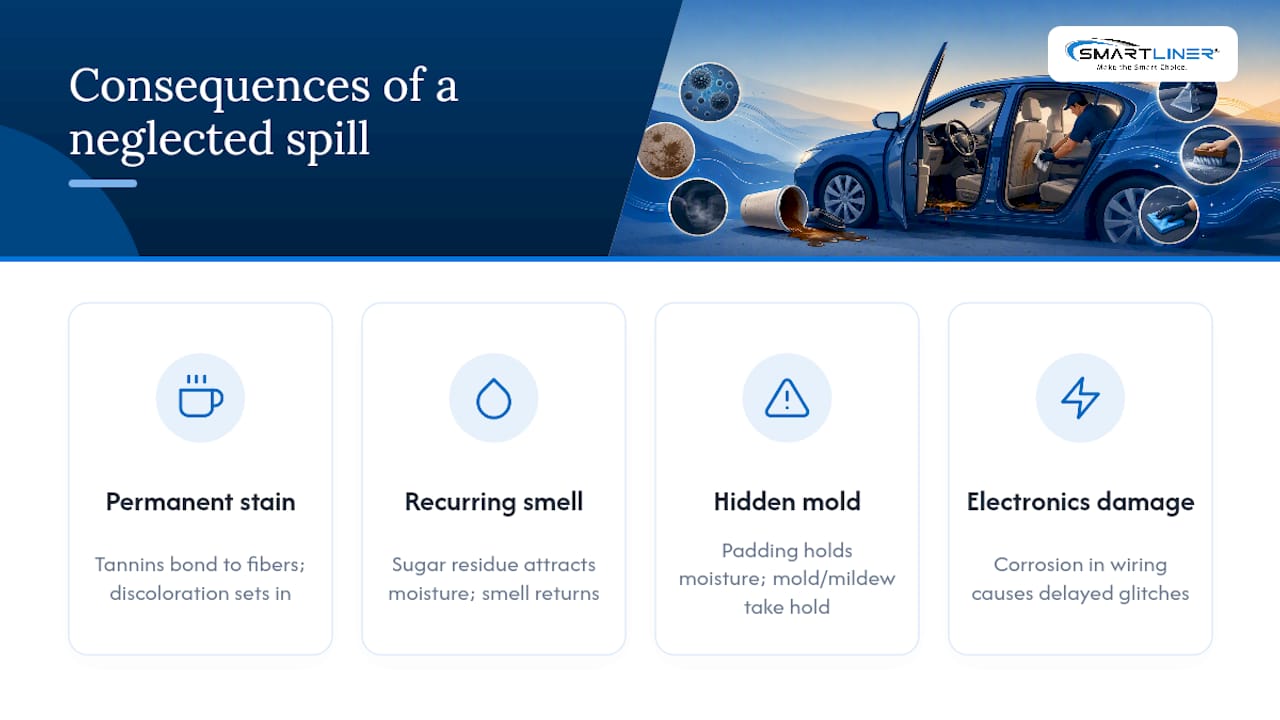
Coffee left untreated doesn’t stay a cosmetic problem. Tannins deepen into a permanent discoloration over days as they fully bond with fabric dye and fibers, and that staining tends to darken and set rather than fade on its own. Sugar residue keeps attracting moisture from humidity and temperature swings inside the cabin, which means the smell can return in waves even after you think it’s handled.
Padding underneath carpet and seats holds moisture the longest, and that’s where mold and mildew take hold if a spill never fully dries. Once mold establishes itself in foam, cleaning the visible surface does nothing. The smell keeps coming back because the source is buried below what you can see or reach with a towel.
Electronics carry their own timeline for damage. A spill that reaches dash components, USB ports, or wiring harnesses near the console can cause corrosion that shows up weeks later as intermittent glitches rather than an immediate failure. That delayed failure is part of why a coffee spill near electronics deserves an inspection even if everything seems to work fine right after it happens.
Resale value takes a hit too. A car with a visible seat stain or a faint sour smell during a test drive loses negotiating leverage, regardless of how well the engine runs.
How Do You Stop a Coffee Stain From Setting In?
The window to prevent a permanent stain is short, and what you do in that window matters more than any product you buy after the fact. Getting to the spill within minutes, rather than after it’s had time to dry, is the single biggest factor in whether a stain sets.
A few habits make that window work in your favor:
- Keep an enzymatic cleaner or a tannin-specific spotter in the car rather than assuming you’ll deal with it once you get home.
- Treat the spot even if it looks like it wiped away fine. Tannins can stain invisibly at first and darken over the following day as they oxidize.
- Avoid reaching for the nearest all-purpose cleaner. Many are alkaline-based and, per detailer guidance on tannin chemistry, can chemically set the stain rather than lift it.
- Blot test any product on a hidden section of fabric first. Fifteen seconds of caution avoids a bleached spot next to your coffee spot.
- If the drink had milk or sugar, don’t wait to see if it smells later. Treat it as a residue problem immediately, not just a stain problem.
What Cleaning Products Are Safe for Car Interiors?
Not every carpet cleaner or spot remover belongs in a car, and the wrong choice can do more damage than the coffee itself.
Mild dish soap diluted in cool water remains one of the safest general-purpose options for cloth upholstery, since it lifts residue without the aggressive alkalinity that sets tannins. For carpet specifically, a diluted white vinegar solution or a peroxide-based spot cleaner works with the tannin chemistry rather than against it, per the same detailer analysis that flags high-alkaline cleaners as a common mistake.
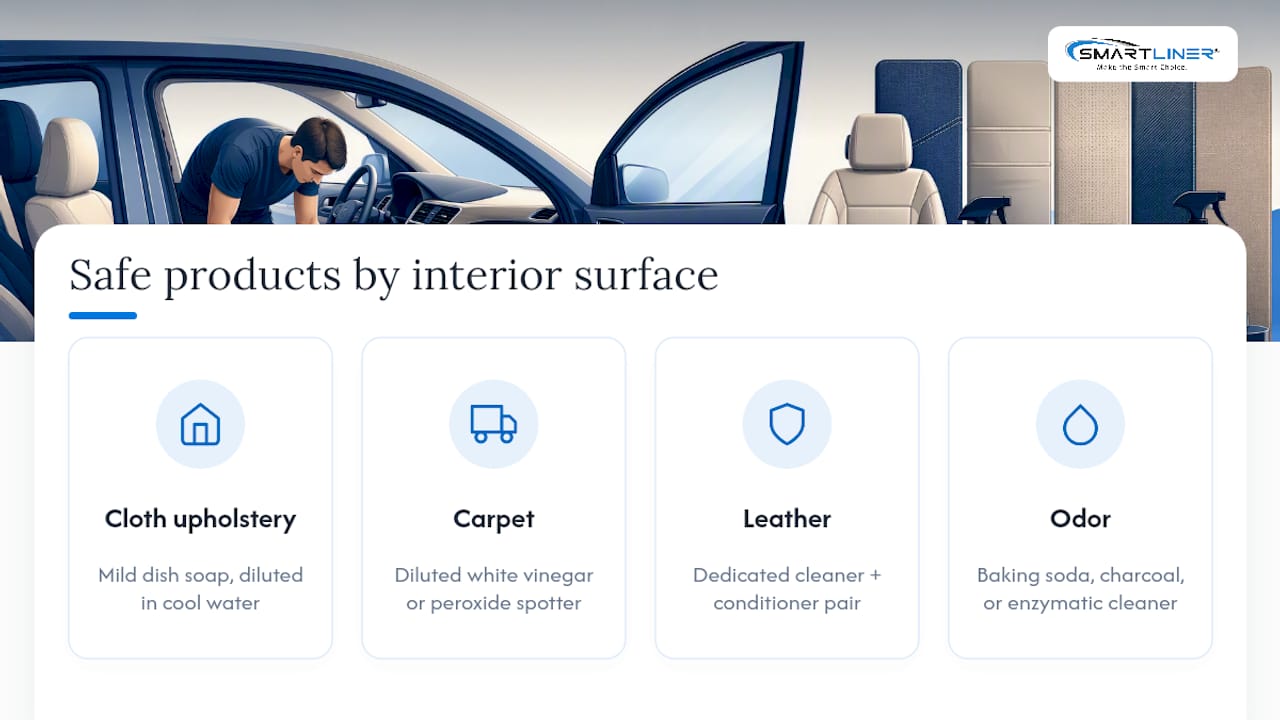
Leather needs a dedicated leather cleaner and conditioner pair. General-purpose sprays strip the finish and dry out the hide over repeated use.
For odor rather than stain, baking soda left overnight and activated charcoal bags handle surface smell reliably, and enzymatic cleaners go a step further by breaking down the organic matter in milk and sugar residue rather than masking it. If odor traces back to something less obvious, a broader approach to diagnosing car odor sources can help before you keep layering products on top of a smell that isn’t actually gone.
Whatever you use, test it on a hidden patch first, and never mix ammonia-based glass cleaners with vinegar or peroxide solutions on the same surface.
What Prevention Actually Looks Like Inside a Car
Most coffee disasters trace back to the same gap: nothing between the cup and the carpet. Custom-fit liners with raised edges catch a spill before it reaches padding, a feature found in some floor mats and cargo liners made from eco-friendly, recyclable material designed for daily-life messes. Many customers point to the exact fit, easy rinse-off cleaning, and simple installation as reasons they feel confident about managing spills. A secured cup holder and a spill-proof travel mug close the rest of the gap. None of this replaces fast cleanup once coffee is already down, but it changes how often you need to think about cleanup at all.
— Marty
Which Smartliner Mats Fit Your Coffee-Spill Prevention Plan?
If you’ve just spent twenty minutes blotting coffee out of carpet, the fastest upgrade you can make is a liner that turns the next spill into a thirty-second wipe instead of a weekend project. The Smartliner Universal Fit Vehicle Floor Mat Liner covers the footwell with raised edges that contain liquid before it reaches carpet, and it rinses clean with a hose rather than requiring an extraction session.
For a tighter, edge-to-edge fit, the SMARTLINER Floor Liners are built to match specific vehicle models, including options like the Dodge Grand Caravan and Chrysler Town & Country liners and fits for models like the 2010-2011 Equinox and Terrain, so the containment lip runs along your actual floor contour instead of leaving gaps.
The same spill logic applies at home. SMARTLINER HOME Under Sink Cabinet Mats catch leaks and drips under a sink the same way a car liner catches a dropped travel mug.
Before you order, measure your specific model year and trim, since fit varies by generation even within the same vehicle name. Pick a liner sized to your exact footwell and the next coffee spill becomes a non-event.
Sources
- Spilled Coffee in Your Car? Do This Before It Stains | ShineDrive Detailing
- How to Remove Coffee Stains from Car Carpet: A Professional Detailer’s Guide
- How to Clean Spilt Coffee in Car: Effective Tips to Remove Stains and Odors
- How to Remove Coffee Stains Out of Car Seats
Recommended
- 2007-2013 Chevrolet Silverado 2500 3500 HD Floor Liners
- SMARTLINER Custom Fit Floor Liners For 2011-2012 Ford F-250/F-350/F-450 Super Duty Crew Cab with Depressed Drivers Side Pedal
- 2015-2018 Ford Ranger Floor Liners
- SMARTLINER Custom Fit Floor Liners For 2015-2016 Ford Explorer without 2nd Row Center Console