

For most Toyota Tundra owners, the best bed mat is a custom-fit, heavy rubber or TPE mat built to the exact contours of the Tundra bed, not a universal drop-in. Smartliner Truck Bed Mat Liners stand out for exactly that reason: model-specific fit and durable, easy-clean material that holds up through years of hauling. Two things separate a good mat from a great one here: how precisely it matches your bed’s dimensions, and how well the material sheds moisture, grime, and impact over time.
TL;DR:
- A custom-fit rubber or TPE bed mat provides superior grip, impact resistance, and better moisture shedding compared to universal drop-in options, and costs between $50 and $230.
- Material choice affects durability, with rubber and TPE resisting UV, chemicals, and temperature swings better than carpet-style mats, which are softer but trap dirt and moisture more easily.
- Accurate measurement of bed length, cab type, and factory features is essential to avoid gaps, shifting, or blocking tie-downs, and matching these details ensures a long-lasting, reliable fit.
- The underside design of a bed mat influences rust prevention, with ridged or knobby backs promoting airflow and drainage, which helps prevent moisture buildup against the bed’s steel surface.
- Smartliner’s model-specific mats have quick installation, eco-friendly materials, and precise cutouts for factory hardware, making them a practical alternative to spray-on liners or universal drop-ins.
Table of Contents
- What Makes the Best Tundra Bed Mat for Most Owners
- Rubber, Carpet, or Composite: Which Material Actually Wins?
- How Do You Choose the Right Fit for Your Tundra’s Bed?
- What Keeps a Bed Mat From Rusting Your Truck Bed?
- A Quick Checklist Before You Buy a Tundra Bed Mat
- Why Smartliner’s Fit Technology and Install Time Matter
- Does a Bed Mat Hold Up to Oil, Chemicals, and Weather?
- Will a Bed Mat Block Your Tie-Downs or Storage Features?
- How Does a Bed Mat Compare to OEM and Spray-On Options?
- The Fit-First Case for Choosing a Tundra Bed Mat
- Where to Buy a Tundra Bed Mat That Actually Fits
- Sources
- FAQ
What Makes the Best Tundra Bed Mat for Most Owners
Some truck bed mat liners are built around precise-fit technology, meaning the mat is scanned and cut to match the Tundra’s bed floor, wheel wells, and tie-down cutouts rather than approximating them. Some mats use recyclable materials across the lineup, which matters if you care about what happens to a worn-out mat down the road. Installation is straightforward enough that most owners report having the mat in place within 10 to 15 minutes, no tools, no trimming, no guesswork.
This kind of mat fits best if you’re the owner who tosses tools, coolers, and gear in the bed regularly and wants a surface that grips instead of slides. It also suits anyone who’s tired of hosing out a carpet-style liner every time mud or fertilizer bags leave a mess behind.
If a custom-fit rubber or TPE mat isn’t the right call for your situation, three broad categories cover most of the market:
- Heavy rubber mats — excellent grip and impact resistance, moderate price, heavier to lift in and out.
- Carpet-style bed rugs — softer underfoot and quieter, but they trap dirt and moisture more easily.
- Rigid composite or plastic liners — tough and low-maintenance, but often bulkier and less flexible around bed contours.
Pro Tip: If you’re comparing a mat’s price to a full spray-on liner, remember you’re comparing two different jobs. A mat protects the floor; a spray-on liner coats the entire tub.
On price, KBB reports rubber mats typically run about $50 to $230, while aftermarket spray-on liners often land between $300 and $900. A quality custom-fit mat sits at the affordable end of that range while still delivering coverage that a generic mat can’t match.
Rubber, Carpet, or Composite: Which Material Actually Wins?
Grip separates these materials fast. Rubber and TPE mats offer a textured, high-friction surface that stays put even when wet, which matters if you’re loading gear in the rain or hauling on a job site. Carpet-style mats can feel grippy when dry but lose traction once moisture or oil gets into the fibers.
Comfort is where the trade-off flips. Material comparisons from specialist reviewers show heavy rubber delivers the best cargo grip and impact protection, but carpet-style bed rugs score higher on the “knee test,” the simple check of kneeling on the mat to see how it feels against a hard bed floor. If you’re frequently kneeling to strap down equipment or work on a project in the bed, that difference is noticeable within the first few uses.
Durability tells a similar story. Rubber and TPE resist UV breakdown, chemical spills, and heat buildup far better than carpet, which can fade, mat down, or absorb odors over a few seasons. BedRug’s product guide notes that heavy-duty rubber mats are chemical-resistant and easy to wipe clean, a claim that holds up against oil, fertilizer, and road salt exposure. Composite liners resist all of the above too, but their rigid construction can crack under sudden cold-weather impact where rubber simply flexes.
Quick reference:
| Material | Grip | Comfort (knee test) | Cleaning | Typical cost |
|---|---|---|---|---|
| Heavy rubber/TPE | Excellent | Firm | Soap and water | $50–$230 |
| Carpet-style bed rug | Good when dry | Best | Requires vacuuming/brushing | Mid-range |
| Rigid composite | Good | Firm | Easy, low upkeep | Mid to high |
| Spray-on liner | Excellent | Firm | Permanent, no removal | $300–$900 |
TruckBedGuide’s comparison backs this up directly: rubber resists stains and moisture and cleans up with soap and water, while carpet-style mats trap debris and demand more frequent attention. For anyone hauling firewood, mulch, or shop equipment regularly, that maintenance gap adds up over a single season.
How Do You Choose the Right Fit for Your Tundra’s Bed?
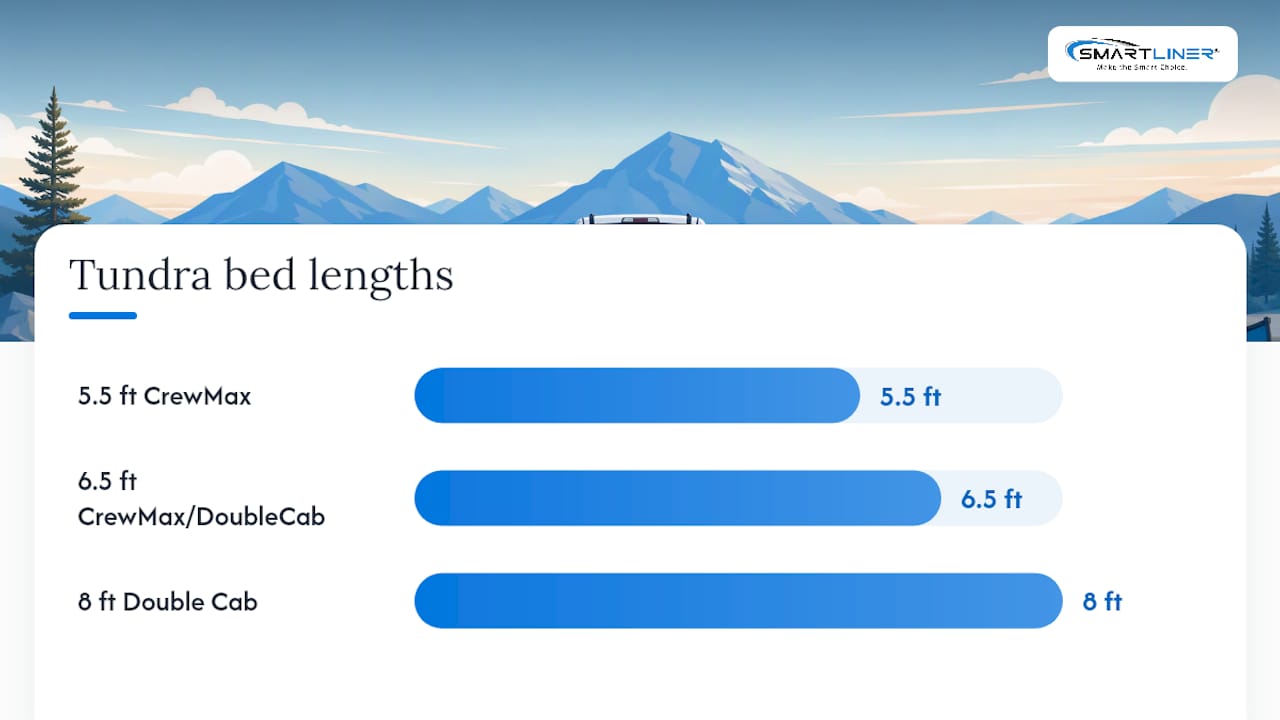
Tundra beds come in three lengths: 5.5 feet (CrewMax), 6.5 feet (Double Cab or CrewMax long bed), and 8 feet (Double Cab). Picking the wrong length is the single most common mistake buyers make, and it’s an easy one to avoid with a few minutes of measuring.
- Measure from the bulkhead to the tailgate with the tailgate closed, not the exterior bed length listed in marketing materials.
- Identify your cab type (CrewMax vs Double Cab) since Toyota pairs specific bed lengths with each configuration by model year.
- Locate your factory tie-down points before ordering, since a mat cut without matching cutouts will block or partially cover them.
- Check for bed hardware notches, including any factory tool box mounts or utility rail systems that a universal mat won’t accommodate.
- Confirm the listing matches your exact year and trim, since Tundra bed dimensions have shifted across generations.
Custom-fit matters here because a mat that’s even an inch off at the edges will shift under load, expose bare metal at the seams, and let debris collect in the gap. Product guides consistently note that custom-fit mats reduce movement and wear compared to universal drop-ins, which is the whole reason they cost slightly more up front. A universal mat might fit three different trucks poorly rather than one truck perfectly, and that compromise shows up as curled edges and trapped moisture within a year or two.
Smartliner’s custom-fit truck bed mats are built to these exact bed and cab combinations rather than a generalized template, which is worth checking against your Tundra’s specific configuration before you buy.
What Keeps a Bed Mat From Rusting Your Truck Bed?
The underside of a mat matters just as much as the surface you see. A flat, non-channeling backing traps water, salt, and grit between the mat and the bed floor, and that trapped moisture is exactly what accelerates rust in a steel bed over time.
A knobby or ridged underside changes that equation. Smartliner’s own product guide recommends this texture specifically because it promotes airflow and lets water drain out instead of pooling under the mat, a detail that’s easy to overlook when you’re focused on the top surface alone.
Maintenance is simple if the underside is doing its job:
- Hose off loose debris after any messy haul.
- Use mild detergent and water for grease, oil, or road grime.
- Dry the mat fully before reinstalling, especially after washing your truck.
- In salt-heavy winter regions, rinse the underside monthly to prevent salt buildup against the bed floor.
Thickness and reinforced edges play a supporting role. A mat with reinforced or beveled edges resists curling at the corners, which is usually the first sign of wear on cheaper mats. When you install any new mat, check that it lays flat with no bunching at the wheel wells, and inspect it again after the first few loads to confirm nothing has shifted.
Pro Tip: If you’re returning a mat for a suspected defect, photograph the underside pattern and any curling before you repackage it. Warranty claims move faster with clear photos of the actual issue.
A Quick Checklist Before You Buy a Tundra Bed Mat
Run through these five checks before you add a mat to your cart or before you accept a return decision on one that already arrived:
- Confirm exact bed length and cab type listed on the product page matches your Tundra’s year and configuration.
- Match material to your primary use: rubber or TPE for hauling and grip, carpet-style for comfort and quieter loading, composite for low-maintenance durability.
- Inspect the underside design for a knobby or ridged pattern rather than a flat surface that can trap moisture.
- Confirm the cleaning method, warranty terms, and return policy before you buy, not after something goes wrong.
- Set a realistic price expectation in the $50 to $230 range for a quality rubber mat, and treat prices far below that range as a signal the fit or material may be compromised.
A poor fit usually shows itself fast: gaps along the sidewalls, a mat that shifts when you brake hard, or edges that don’t sit flush against the bed rail. Catching that during your first inspection saves a return shipment later.
Why Smartliner’s Fit Technology and Install Time Matter
Some truck bed mats are backed by precise-fit technology used across floor liner and cargo liner lines, meaning the bed mat is engineered to the Tundra’s actual bed geometry rather than a rough approximation. Some mats are built with eco-friendly, recyclable materials, a detail worth knowing if longevity and end-of-life disposal factor into your buying decision.
A few points worth knowing before you order:
- Installation typically takes 10 to 15 minutes with no cutting or trimming required.
- The recyclable material composition supports easy cleaning without breaking down under repeated washing.
- Customer feedback on these mats consistently points to durability and simple upkeep as the standout benefits.
- Specific warranty terms and model-year compatibility are listed on each product page, so check yours against your Tundra’s exact trim before ordering.
That combination of documented fit precision and a fast install process is why the mat holds up as a credible top pick rather than just a marketing claim.
Does a Bed Mat Hold Up to Oil, Chemicals, and Weather?
UV resistance gets most of the attention, but oil and chemical exposure do more long-term damage to a lower-quality mat. Heavy rubber and TPE mats resist gasoline, motor oil, fertilizer, and de-icing salt without softening or discoloring, which matters if you’re hauling lawn equipment or shop supplies regularly.
Temperature swings are the other test. A rubber mat that stays flexible in freezing weather won’t crack the way a cheap composite panel can when it’s loaded down in sub-zero conditions. Heat is the opposite problem: a dark rubber mat sitting in direct summer sun can get hot enough to soften briefly, though quality materials return to shape once temperatures drop.
Rain and standing water test the underside more than the top surface. A mat that channels water away instead of pooling it protects both the mat and the steel bed beneath it, reinforcing why underside drainage design deserves as much attention as surface texture. Chemical spills, whether it’s brake fluid, paint, or fuel, wipe off a quality rubber surface without staining, while a carpet-style mat can absorb and hold that same spill permanently.
If your Tundra sees regular exposure to any of these conditions, chemical and weather resistance should weigh as heavily in your decision as UV stability alone.
Will a Bed Mat Block Your Tie-Downs or Storage Features?
A poorly designed mat can cover factory tie-down points, block bed rail systems, or interfere with a tool box mount, turning a protective accessory into an obstacle. This is one of the clearest arguments for custom-fit over universal mats.
Custom-fit mats are cut with cutouts that align to factory tie-down locations, so cargo straps and hooks remain fully accessible after installation. Universal mats, by contrast, often cover these points entirely or require you to cut the mat yourself, which usually voids any warranty coverage and leaves a rough edge prone to tearing.
If your Tundra has a utility rail system, a factory tool box, or aftermarket bed storage, check the product listing specifically for compatibility notes before ordering. A mat that doesn’t account for these features can still work, but you may end up trimming around hardware or losing use of a rail slot entirely. Confirming this detail up front avoids a frustrating install day where the mat looks right until you try to use your tie-downs.
How Does a Bed Mat Compare to OEM and Spray-On Options?
Toyota’s OEM bed mat offers a reasonable baseline, decent fit, adequate grip, but it’s priced at a premium relative to aftermarket rubber mats offering comparable or better protection. Aftermarket custom-fit mats close that gap by matching bed dimensions just as precisely while typically costing less.
Spray-on liners sit in a different category entirely. They bond permanently to the bed and cost significantly more, often $300 to $900 installed, but they can’t be removed, cleaned separately, or swapped if a section wears out. A mat, by contrast, can be pulled out, hosed down, and reinstalled in minutes, and it protects the factory paint and finish underneath rather than covering it permanently.
For most owners, the practical middle ground is a custom-fit rubber or TPE mat: near-spray-on levels of protection, OEM-level fit precision, and a fraction of the cost with none of the permanence.
The Fit-First Case for Choosing a Tundra Bed Mat
Most buying guides treat bed mats as a commodity decision: pick a material, pick a price, done. That misses the point. The variable that actually determines whether a mat lasts three years or eight is fit precision paired with underside drainage, not the surface texture alone.
The knee test gets treated as a minor comfort note, but it’s a legitimate deciding factor if you kneel in your bed regularly. Don’t let grip specs override comfort if your use case leans toward frequent kneeling rather than heavy hauling.
If there’s one thing conventional advice underplays, it’s the underside. Buyers fixate on top-surface texture and price, while the ridged backing that prevents rust gets a single line in most reviews. That’s backwards. A mat can look great on top and still cause corrosion problems within two winters if the backing traps moisture against bare steel.
Prioritize fit and drainage first, material second, and price last. Get those first two right and the mat will outlast the truck’s factory warranty.
— Marty
Where to Buy a Tundra Bed Mat That Actually Fits
Smartliner-usa is the direct route to a bed mat built for your Tundra’s exact bed length and cab type, not a generic template stretched to fit multiple trucks. Against the checklist covered above, exact fit, drainage-friendly underside, easy cleaning, and a fast install, Smartliner’s Truck Bed Mat Liners check every box without the premium markup of a spray-on liner or the compromise of a universal mat.
Installation typically runs about 10 to 15 minutes with no cutting required, and some mats are made from recyclable materials designed to hold up to years of loading and cleaning. Warranty and return details are listed on the product page, so confirm your exact Tundra model year and cab type before ordering. If you’re ready to stop guessing at universal fits, select your Tundra’s configuration on the product page and get a mat cut to your truck’s actual dimensions.
Sources
- Bed Liner: What To Consider for Your Truck — KBB
- Rubber Mat, Carpet, or Bare Bed: Which Stays Cleaner Over Time? — TruckBedGuide
FAQ
What Are the Best Floor Mats for a Toyota Tundra?
The best floor mats for a Tundra are custom-fit liners engineered to the cab’s exact floor pan and pedal area, not universal trim-to-fit mats. Smartliner offers custom-fit floor liners built specifically for Tundra and Sequoia cab configurations, which keeps coverage consistent along the edges and around factory floor hooks.
Who Makes the Best Truck Bed Mats?
Brands that specialize in custom-fit, model-specific mats generally outperform generic universal options because they match bed contours and tie-down cutouts precisely. Smartliner’s custom-fit truck bed mats are built around this same precise-fit approach, using durable rubber construction designed for easy cleaning and long-term wear.
What Is the Best Toyota Tundra Bed Cover?
A bed cover and a bed mat solve different problems: a cover protects cargo from weather and theft, while a mat protects the bed floor from impact and scratches. Many Tundra owners run both together, since a bed mat continues protecting the floor underneath a cover with no loss of tie-down access when the mat is cut to match factory hardware.
Which Year Tundra Should You Stay Away From?
Bed dimensions and hardware layouts have changed across Tundra generations, so the more relevant question for a bed mat purchase is confirming your exact model year rather than avoiding a specific one. Always match the mat listing to your Tundra’s precise year and cab type, since even small dimensional shifts between generations affect fit.
How Much Does a Good Tundra Bed Mat Cost?
Quality rubber bed mats typically run $50 to $230, well below the $300 to $900 range for professionally installed spray-on liners. Smartliner’s current pricing for its custom-fit truck bed mat liners is listed on the product page.
Recommended
- Best Tundra Floor Mats in Recyclable TPE
- SMARTLINER Floor Liners for 2014-2021 Toyota Tundra Double Cab (with Coverage Under 2nd Row Seat)
- SMARTLINER Custom Fit Floor Liners For 2007-2021 Toyota Tundra CrewMax Cab (with Coverage Under 2nd Row Seat)
- SMARTLINER Custom Fit Floor Liners For 2012-2013 Toyota Tundra Double Cab