

For most Toyota Tacoma owners, the best Tacoma bed mat is a heavy, custom-fit, removable rubber-style mat, not a spray-in liner or a generic universal mat. It matches your bed’s contours precisely, resists sliding under cargo, and comes out in minutes for a hose-down. That’s the model behind SMARTLINER Truck Bed Mat Liners, and here’s why this style wins for daily drivers and weekend haulers alike:
- Precise fit — molded to your bed’s exact dimensions, no gaps at the wheel wells or tailgate.
- Anti-slip surface — keeps tools, coolers, and gear from shifting under braking.
- Fast cleanup — pull it, rinse it, done. No scrubbing bed seams or touching up spray texture.
Key Takeaways
A heavy, custom-fit, removable rubber mat outperforms spray-in liners and generic mats for most Tacoma owners because it delivers better grip, easier cleaning, and no permanent modification.
| Point | Details |
|---|---|
| Best default choice | A heavy, custom-fit rubber mat beats spray-in and universal mats for most daily and weekend use. |
| Confirm bed length first | Short bed and long bed use different SKUs; measure or check your model year before ordering. |
| Mats beat spray-in for removability | Mats protect without permanent bonding and come out fully for cleaning or resale. |
| Price roughly matches OEM | Aftermarket custom-fit mats fall near the $110 to $190 OEM range while adding fit precision. |
| Recommended purchase | SMARTLINER Truck Bed Mat Liners offer precise-fit technology and recyclable material built for Tacoma bed dimensions. |
Table of Contents
- What Is the Best Tacoma Bed Mat for Your Truck?
- Mat vs. Spray-In Liner vs. OEM Mat: Which Wins?
- How Do You Match a Bed Mat to Your Tacoma’s Fit?
- How Long Does a Tacoma Bed Mat Actually Last?
- What Should You Expect to Pay for a Good Bed Mat?
- Why Trust Smartliner-usa’s Recommendation on Bed Mats?
- Get the Right Fit Before You Check Out
- Sources
What Is the Best Tacoma Bed Mat for Your Truck?
Not every Smartliner-usa product built for a Tacoma bed does the same job, so matching the SKU to your actual use case matters more than picking the “top” one on a list. Three product families cover almost every scenario a Tacoma owner runs into.
Truck bed mat liners sit directly on the bed floor and side rails, protecting the load area from scratches, dents, and moisture without altering the factory bed surface. Cargo liners extend that coverage into wheel wells and vertical surfaces for owners hauling loose materials, mulch, or pet gear that tends to spill. Floor liners, while built for the cab rather than the bed, round out the same all-weather protection if you’re outfitting the whole truck at once.
- Daily hauler, light gear, occasional home projects → start with a truck bed mat liner
- Frequent mulch, gravel, gear that touches the walls, or pets riding in back → move up to a full-coverage cargo liner
Pro Tip: If you switch between hauling loose material and clean cargo depending on the week, buy the cargo liner. It is easier to downgrade your habits than to upgrade your coverage mid-season.
Mat vs. Spray-In Liner vs. OEM Mat: Which Wins?
Every Tacoma owner eventually faces this decision, and the right answer depends on what’s actually going in the bed, not just what looks toughest at the dealership.
- Grip and cargo control. A heavy mat reduces sliding the moment you set it in, because the rubber compound and raised ribbing grab boxes and gear on contact. Spray-in texture helps, but smoother spray jobs or worn coatings can still let items slide, particularly with plastic totes.
- Durability and permanence. Spray-in liners bond to the bed and resist abrasion from sharp-edged loads better than any removable product, but that bond is forever. A mat protects the factory finish underneath without touching it, which matters if you plan to sell the truck or swap accessories later.
- Comfort and usability. Mats are noticeably kinder on knees when you’re loading in the bed, and they lift out for a real cleaning rather than a wipe-down. Forum consensus on Tacoma4G leans toward removable heavy mats for exactly this reason: easier cleanup, better knee comfort, and no compromise to the bed’s finish.
- Cost and commitment. OEM mats typically run in the $110 to $190 range, aftermarket custom-fit mats land in a similar band, and professional spray-in work usually costs more once labor is factored in.
How Do You Match a Bed Mat to Your Tacoma’s Fit?
Fit mistakes are the most common (and most avoidable) reason a bed mat gets returned. A few checks before you buy save the hassle entirely.
- Confirm bed length first. Tacomas ship in short bed and long bed configurations, and OEM and aftermarket mats are sold as separate SKUs for each. If you’re unsure which you have, measuring the bed floor from the bulkhead to the tailgate settles it in under a minute.
- Check your model year. Bed dimensions and tie-down positions have shifted across Tacoma generations, so a mat cut for a 2016 model won’t necessarily sit flush in a 2024.
- Composite vs. steel bed. Composite beds (common on later trims) are already less prone to sliding cargo than bare steel, but a heavy mat still adds grip and prevents surface scuffing either surface can show over time.
- Camper shell compatibility. Owners running GFC campers report that mats work well underneath, provided the mat doesn’t interfere with the camper’s mounting feet or tie-down points. Check clearance around those mounts before final installation, according to notes from the GoFastCampers forum.
Smartliner-usa’s custom-fit approach addresses all four points at once by mapping each mat to a specific model year and bed length rather than selling one universal shape.
How Long Does a Tacoma Bed Mat Actually Last?
A well-built rubber mat should hold its shape and grip for years, but knowing what wear looks like keeps you from either replacing it too early or ignoring real damage.
Watch for cracking along the ribs, flat spots that no longer spring back after weight is removed, and a surface that’s gone smooth where it used to bite into cargo. Any of those signals it’s time to replace, not just clean.
- Pull the mat out fully before cleaning; don’t hose it down in place.
- Rinse with plain water first, then a mild detergent for grease or grime.
- Let it dry completely before reinstalling. Trapped moisture underneath is what encourages mildew, not the mat itself.
- Store it flat, or rolled loosely, rather than folded tightly for long stretches, to avoid permanent creasing.
Pro Tip: Road salt and degreasers left to sit are harder on rubber compounds than regular dirt. Rinse the mat within a day or two of winter driving instead of letting salt residue dry into the texture.
What Should You Expect to Pay for a Good Bed Mat?

Price tells you less about quality than fit accuracy and material weight do, but a few benchmarks help you sanity check any listing.
OEM mats for current Tacomas list around $170 to $190, older OEM part numbers run closer to $110 to $190 depending on the vendor, and custom-fit aftermarket mats occupy a similar range while often adding features like deeper spill channels. Full-coverage cargo liners cost more but extend protection up the walls. Spray-in work typically costs more than either mat option once shop labor is included.
- Prioritize exact-fit accuracy over a lower price on a universal mat.
- Heavier gauge rubber resists tearing better under sharp or heavy cargo.
- A real warranty on materials is worth more than a marginally cheaper listing.
- If you haul commercially, camp frequently, or load heavy equipment weekly, pay up for the thicker, full-coverage option. Light weekend use rarely needs it.
How Do You Install and Remove a Tacoma Bed Mat?
Installation takes a few minutes and doesn’t require tools for most mat styles.
- Clean the bare bed floor and rails before the first fit.
- Lower the mat in flat, starting at the tailgate end and working toward the cab.
- Press it into the wheel well contours so it sits flush, not bunched.
- To remove, lift from a rear corner and peel forward. Working around a camper shell or strapped cargo, unstrap gear first rather than trying to slide the mat out underneath it.
- Roll loosely for storage instead of folding to prevent crease lines.
Why Trust Smartliner-usa’s Recommendation on Bed Mats?
Smartliner-usa builds its bed mat liners around the same precise-fit technology and recyclable material standards that define the rest of its floor liner and cargo liner lineup, mapping each product to a specific model year and cab configuration rather than selling a one-size-fits-all shape.
Owners consistently point to two things when a bed mat earns repeat purchases: it has to sit flush without babysitting during install, and it has to survive real cleaning without cracking at the ribs within the first year.
That standard applies across the company’s catalog, from the 4Runner cargo liners built for the sliding rear tray configuration to the double cab Tacoma floor liners covering older model years without factory manual controls.
Get the Right Fit Before You Check Out
Unlike a generic mat trimmed at a shop or a spray-in job that locks you into one bed finish permanently, Smartliner-usa’s truck bed mat liners are molded to your Tacoma’s exact model year and bed length from the start, so there’s no trimming, no guesswork, and nothing bonded to the bed you can’t remove later. The material is 100% recyclable, the surface is built to resist sliding cargo, and installation takes minutes without tools.
Before you check out, confirm your Tacoma’s bed length and model year against the product listing to make sure you’re ordering the correct SKU. From there, head to the SMARTLINER Truck Bed Mat Liners page to select your fit, or browse the broader SMARTLINER Floor Liners lineup if you’re outfitting the cab at the same time.
A Tacoma Owner’s Take on Why Removability Wins
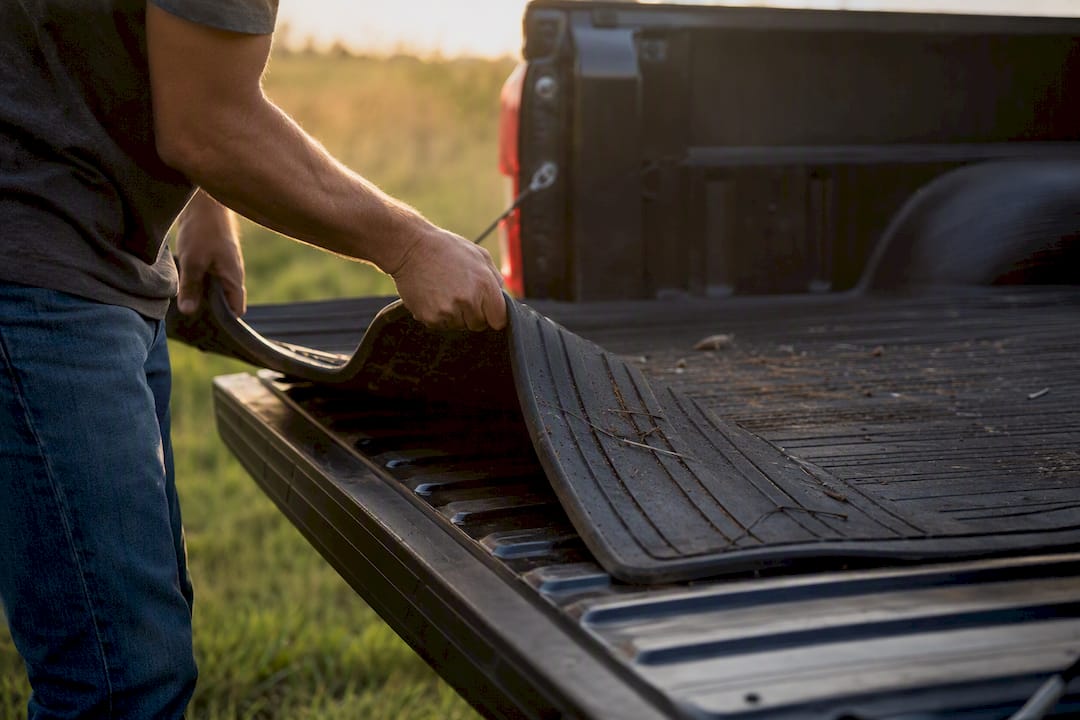
Hands-on experience with Tacoma beds points to one consistent lesson: the mats that get used, cleaned, and kept in place for years are the ones you can pull out without a fight. Removability matters more than most buyers expect going in, especially once camping gear, dogs, or job-site tools start rotating through the bed weekly. Owners planning permanent commercial use, or those who want sidewall coverage against constant abrasive loads, are better served looking at spray-in work instead.
Sources
- PT580-35050-SB - Genuine Toyota 2005 & Newer Tacoma 5’ Short Bed Rubber Bed Mat 2005-2023 Toyota Tacoma | Elmhurst Toyota Parts
- Tacoma4g
- Theyotagarage
Recommended
- SmartCoverage™ Floor Liners For 2012-2015 Toyota Tacoma Double Cab | Smartliner USA
- SmartCoverage™ Floor Liners For 2005-2011 Toyota Tacoma Double Cab (No Manuals) | Smartliner USA
- SMARTLINER Custom Fit Floor Liners For 2007-2011 Toyota Tundra Double Cab | Smartliner USA
- SMARTLINER Custom Fit Floor Liners For 2007-2011 Toyota Tundra CrewMax Cab | Smartliner USA