

For most dog owners, the best cargo liner is a custom-fit, TPE or rubber-backed liner built for your exact vehicle. It seals the cargo floor edge to edge, contains liquid better than fabric alternatives, and hoses clean in minutes. A padded quilted liner is the right call only if comfort matters more than total containment, like short trips with an anxious dog. Research from GarageGist and The Puppy Store both point to the same conclusion: fit determines whether mud and hair stay contained or migrate into the wheel wells. Smartliner-usa builds its cargo liners around that exact principle, using vehicle-specific molds instead of generic trim-to-fit sheets.
Here’s the shortlist, in brief:
- Best overall: Custom-fit TPE/rubber liner, molded to your vehicle’s cargo contours
- Best for split seats or large dogs: A liner with a split-zip system that folds with 50/50 or 60/40 rear seats
- Best budget pick: Universal trimmable mat, hoseable but with looser edge fit
- Best padded/full-coverage option: Quilted 600D Oxford liner with side walls
- Best for beach or pool trips: Waterproof liner paired with an absorbent reversible mat underneath
Key Takeaways
A custom-fit, non-porous TPE or rubber cargo liner delivers the best combination of waterproofing, durability, and cleanup speed for most dog owners.
| Point | Details |
|---|---|
| Fit comes before material | Vehicle-specific liners close wheel-well gaps that universal mats leave open. |
| Seams are the real weak point | Fabric liners marketed as waterproof still leak at stitching and zippers. |
| Match material to your routine | Choose TPE/rubber for quick hosing, quilted fabric for comfort-focused short trips. |
| No liner is chew-proof | Reinforced stitching improves durability but won’t stop a determined chewer. |
| Smartliner-usa for precise fit | Smartliner-usa’s custom-fit, recyclable liners target the exact gaps universal mats miss. |
Table of Contents
- What Is the Best Dog Cargo Liner for Your SUV?
- How Do You Choose the Right Cargo Liner for Your Dog?
- 600D Oxford, TPE/Rubber, or PU Leather: Which Material Wins?
- How Do You Measure Your Cargo Area for the Right Fit?
- How Do You Install, Clean, and Store a Cargo Liner?
- Get the Right Fit With Smartliner-usa
- Sources
What Is the Best Dog Cargo Liner for Your SUV?
The honest answer depends on how wet and messy your trips get, but the material and fit hierarchy stays consistent across nearly every use-case. A vehicle-specific liner made from non-porous TPE or rubber outperforms fabric alternatives on the two things that matter most: keeping liquid contained and cutting cleanup time. Below is how the top categories stack up against each other.
| Best for | Material / construction | Coverage & fit | Waterproofing notes | Cleaning method | Non-slip / stability | Bumper flap & sides | Price tier & warranty |
|---|---|---|---|---|---|---|---|
| Daily protection, all vehicles | TPE/rubber, injection-molded | Vehicle-specific, molded to contours | Non-porous surface, no seams to leak | Hose off, wipe dry | Raised lip, textured non-slip base | Integrated bumper flap, low side walls | Mid to high, multi-year warranty common |
| Split seats/large dogs | Heavy-duty fabric or hybrid with zip panels | Vehicle-specific with split-zip cutouts | Top layer water-resistant; zippers are a weak point | Wipe or spot clean around zips | Anti-slip backing strip | Padded side flaps, bumper protector | Mid tier |
| Budget/universal use | PVC-backed polyester, trimmable | Universal, trimmed to fit | Decent on flat surface, gaps at trimmed edges | Hose off, quick dry | Minimal grip, can shift on smooth floors | Basic or no bumper flap | Low, limited or no warranty |
| Comfort/full coverage | Quilted 600D Oxford, padded foam core | Vehicle-specific or semi-universal | Water-resistant top, absorbs at seams | Machine wash or shampoo | Non-slip underside common | Full side walls, padded bumper guard | Mid tier |
| Beach/pool/mixed use | TPE liner plus absorbent reversible mat | Vehicle-specific liner, universal mat layer | Liner is non-porous; mat wicks residual moisture | Hose liner, machine wash mat | Combined grip from both layers | Bumper flap on base liner | Mid tier |
Decision cards: five shortlisted options
Custom-fit TPE cargo liner. This is the category most dog owners land on once they’ve dealt with a universal mat that slid around or left gaps at the wheel wells. It follows the exact contour of your cargo floor, which means mud stays where it lands instead of sneaking under the edges.
- Pro: No seams to leak, hoses clean in minutes
- Pro: Molded raised lip contains spills without a separate basin
- Con: Higher upfront cost than a flat universal mat Best for owners who load muddy or wet dogs regularly and want a liner that lasts years without replacement.
Premium injection-molded pick with bumper flap. Roundups from A Place for Animals consistently favor liners that pair a non-porous surface with a folded bumper flap and reinforced straps. The flap matters more than most buyers expect. It protects the paint and bumper trim from claw scratches during loading, a wear point universal mats usually ignore.
- Pro: Bumper flap prevents scratches during loading and unloading
- Pro: Reinforced straps keep the liner anchored on rough terrain
- Con: Installation takes a few extra minutes versus a drop-in mat Best for SUV owners who load and unload dogs multiple times a day.
Split-seat friendly liner. Vehicles with 60/40 or 50/50 folding rear seats need a liner that doesn’t force you to remove the whole thing just to fold one side down. Split-zip systems solve this by dividing the liner along the seat’s fold line, a feature Dogster’s review of a split SUV liner calls out as a genuine convenience win for families who alternate between cargo space and extra seating.
- Pro: Fold one seat side without disturbing the other half of the liner
- Pro: Maintains coverage even in a partial cargo configuration
- Con: The zip line is a seam, and seams are where waterproofing weakens Best for families who regularly switch between hauling gear and carrying passengers.
Padded, full-coverage quilted liner. Quilted 600D Oxford liners trade some water resistance for comfort. If your dog rides better on a cushioned surface, or gets carsick on hard plastic, this style earns its keep despite needing more cleaning attention.
- Pro: Padding reduces joint strain on older or arthritic dogs
- Pro: Full side walls stop hair from working into seat crevices
- Con: Requires machine washing or shampooing rather than a quick hose-down Best for short, frequent trips where comfort outweighs total liquid containment.
Budget universal mat. A trimmable PVC-backed mat is the right call if you’re testing whether your dog will even tolerate the cargo area, or if you swap the mat between vehicles. Fit is the trade-off. Trimming to size almost always leaves small gaps at the edges where sand and hair collect.
- Pro: Lowest price point in the category
- Pro: Works across multiple vehicles if you resize it
- Con: Edge gaps from trimming reduce the sealed-basin effect Best for occasional use or households with more than one vehicle sharing a single liner.
None of these liners are chew-proof, a point GarageGist’s liner comparison makes plainly. Reinforced stitching and non-slip backing hold up to claws and shifting weight, but a determined chewer will eventually work through any soft material.
How Do You Choose the Right Cargo Liner for Your Dog?
Prioritize fit first, material second, and cleaning ease third. That order isn’t arbitrary. A perfectly waterproof liner that leaves a two-inch gap along the wheel well defeats its own purpose, since vehicle-specific liners reduce the unreachable gaps where dirt and hair actually accumulate.
Run through this checklist before you commit to a purchase:
- Fit type: vehicle-specific molded liner versus universal trimmable mat
- Waterproofing level: non-porous basin versus water-resistant top layer with exposed seams
- Seam construction: stitched and sealed versus stitched and exposed
- Non-slip backing: textured rubber grip versus smooth PVC underside
- Bumper flap: integrated fold-over protection versus none
- Side walls or padding: raised lip, full side coverage, or flat with no containment
- Cleaning method: hoseable, wipeable, or machine-washable only
- Warranty and return policy: multi-year coverage versus none
Before you check out, confirm a few specifics with the seller or product page: exact cargo floor measurements for your model year, whether the liner accommodates split-seat folding, how the seams are treated (taped, sealed, or simply stitched), and what the return window looks like if the fit is off. Confirm the attachment hardware too. Headrest hooks and anchor straps vary by brand, and a mismatch means the liner shifts under braking.
Pro Tip: If you regularly haul soaked, sandy, or muddy dogs after lake trips or hikes, don’t rely on one layer. Pair a non-porous waterproof liner with an absorbent reversible mat on top. The liner handles containment; the mat wicks residual moisture so it doesn’t pool against the seams.
600D Oxford, TPE/Rubber, or PU Leather: Which Material Wins?
Non-porous TPE or rubber liners deliver the most reliable cleanup, since a quick rinse handles nearly everything a dog tracks in. Quilted 600D Oxford fabric trades that convenience for comfort and padding, and PU leather sits in between, easy to wipe on the surface but still vulnerable at the seams.
- TPE/rubber: hoses clean, doesn’t absorb odor, highly abrasion-resistant, but offers no cushioning
- 600D Oxford/quilted fabric: comfortable and full-coverage, but traps dander and needs machine washing or shampoo treatments over time
- PU leather: wipes clean quickly and looks refined, but stitching and seams remain a leak risk during heavy spills
The cleanup gap is real: GarageGist’s comparison of pet cargo liners found that TPE and rubber-backed liners hose down quickly, while fabric and quilted liners typically require machine washing or shampooing to get fully clean. That difference alone shifts many buyers away from fabric once they’ve dealt with a muddy dog twice.
| Material | Cleaning method | Waterproof level | Durability | Best use-case |
|---|---|---|---|---|
| TPE/rubber | Hose, wipe dry | Non-porous, seam-free | High abrasion resistance | Daily use, muddy or wet dogs |
| 600D Oxford/quilted | Machine wash, shampoo | Water-resistant top only | Moderate, wears at padding | Comfort-focused, short trips |
| PU leather | Wipe clean | Surface-resistant, seams vulnerable | Moderate, can crack over time | Light use, style-conscious owners |
How Do You Measure Your Cargo Area for the Right Fit?
Measure the cargo floor and the loading edge, including bumper flap depth, before you buy anything. Poor fit leaves gaps around wheel wells and side walls that trap dirt exactly where you can’t reach it with a vacuum.
Work through these measurements in order:
- Floor length from the back of the second-row seats to the rear hatch
- Floor width across the wheel wells, not just the widest flat section
- Seatback height if you want coverage that climbs the folded seats
- Bumper flap depth, measured from the loading edge outward
- Seat split position and pass-through width if your rear seats fold 60/40 or 50/50
Quick notes on split-seat compatibility: liners with split-zip systems allow a 60/40 or 50/50 fold without pulling the whole liner out, which matters if you switch between hauling gear and carrying an extra passenger. Check whether the zip line sits exactly on your vehicle’s fold seam. A misaligned split forces you to remove the liner anyway.
- Confirm your factory cargo tray position (high or low) if your model offers both
- Note whether your vehicle has a false floor or subwoofer box that changes the usable depth
How Do You Install, Clean, and Store a Cargo Liner?
Most custom-fit liners install in under five minutes using headrest buckles and anchor straps. No tools required. Removal for cleaning takes about the same time, and how you clean it after that depends entirely on the material.
- Fold or remove rear seats if needed to access the full cargo floor
- Lay the liner flat and align it with the wheel well contours
- Attach headrest buckles or anchor hooks to the seatback frame
- Tension the straps so the liner doesn’t shift during braking
- Tuck the bumper flap over the loading edge
- Fold the rear seats back up and confirm the seatbelt buckles and any pet harness anchor points remain accessible
Cleaning by material: hose down TPE or rubber liners and let them air dry, wipe PU leather with a damp cloth and mild soap, and machine wash or shampoo quilted fabric liners according to the care label. For lingering odors, an enzyme-based pet cleaner works better than standard soap on organic stains.
- Dry the liner fully before folding or rolling for storage
- Store flat when possible to avoid permanent crease lines
- Keep liners out of direct sun for extended periods, since UV exposure degrades both fabric coatings and rubber backing over time
How we picked and compared liners
The comparisons above prioritize four factors in order: vehicle-specific fit, real-world waterproof performance at the seams, cleaning time, and stability under normal driving loads, cross-checked against product specs, hands-on installation notes, and third-party review synthesis from sources like The Puppy Store and A Place for Animals.
- Test scenarios covered daily errands, beach and lake trips, and multi-day hiking loads
- Fit assessment focused on wheel well coverage and bumper flap depth across common SUV body styles
- No liner in this category is chew-proof, and seams remain the most common point of failure for full waterproof containment
Author perspective: advice from a dog owner and vehicle-fit tester
Vehicle-specific TPE or rubber-backed liners are the clear favorite here, mainly because they prevent the slow, invisible damage that universal mats miss around the wheel wells. A padded quilted cover still earns its place for short trips or anxious dogs who need a softer surface. One practical habit: test the full installation, including seat folds and pass-throughs, before you consider the purchase final. A liner that blocks your seat mechanism is a returns headache you can avoid in five minutes.
Get the Right Fit With Smartliner-usa
Smartliner-usa builds cargo liners around your exact vehicle instead of a one-size-fits-most template. If your SUV has a split-fold rear seat or an unusual cargo tray height, like the high and low tray options on the Nissan Rogue Sport, the fit lookup accounts for that automatically instead of forcing a universal compromise.
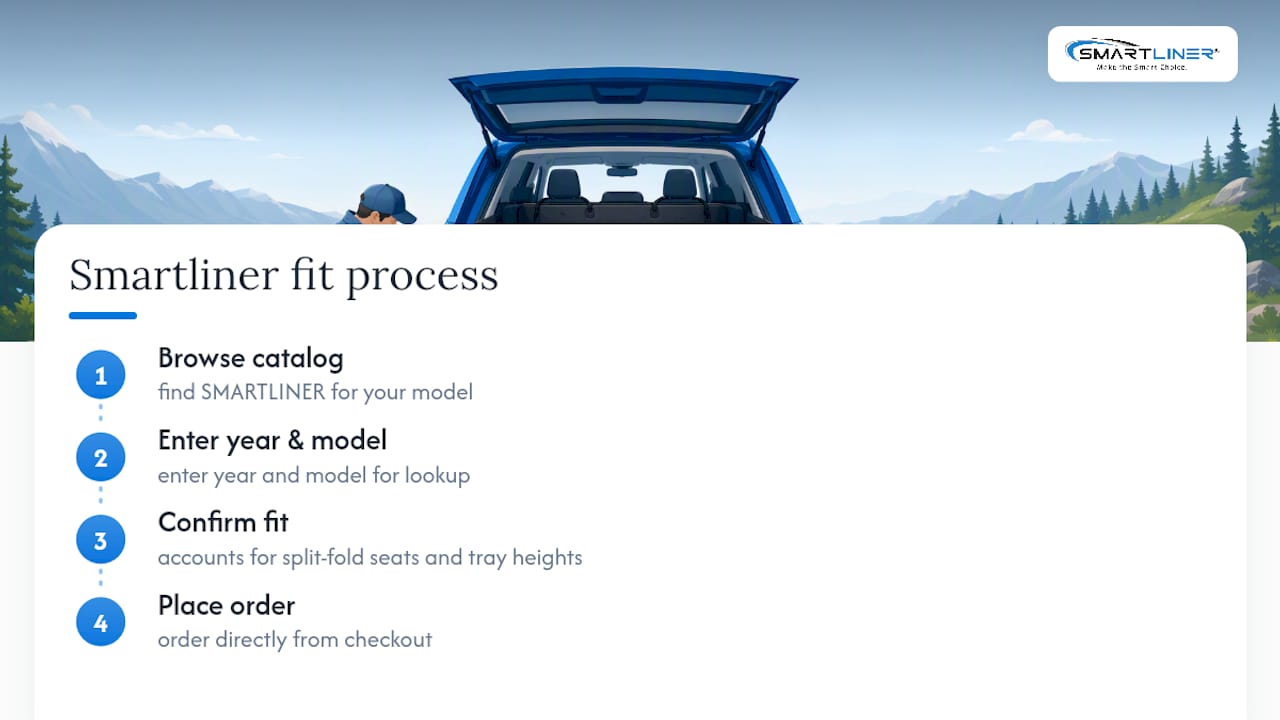
Browse the SMARTLINER Cargo Liners catalog to find your model, or check the full SMARTLINER Floor Liners lineup if you want matching protection for the rest of the interior. Enter your vehicle’s year and model, confirm the fit, and order directly from checkout.
Sources
- Cargo Liners & Pet Hair: Best Options for Dog Owners (2026) | GarageGist
- 15 Best All-Weather Cargo Liners for SUVs with Pets in 2026 - A Place for Animals
- Best Cargo Liners for Dogs (2026) | The Puppy Store - Vetted
Looking up your exact model? Start at Smartliner-usa to find a custom fit for your vehicle.
Recommended
- SMARTLINER Custom Fit Floor Liners For 2016-2021 Mazda CX-3 With Cargo Tray | Smartliner USA
- SMARTLINER Floor Liners for 2017-2024 Nissan Rogue Sport - Factory Cargo Tray in Lowest Position | Smartliner USA
- SMARTLINER Floor Liners for 2017-2024 Nissan Rogue Sport - Factory Cargo Tray in Highest Position (No S Models) | Smartliner USA
- SmartCoverage™ Floor Liners For 2012-2015 Toyota Tacoma Double Cab | Smartliner USA