

For most Toyota 4Runner owners, the best floor mats are custom-fit all-weather liners with high containment walls, a textured non-slip surface, and retention hardware that locks into Toyota’s factory anchor hooks. Smartliner-usa’s custom-fit 4Runner liners are the recommended pick for most owners because they combine scan-verified fit, TPE-grade material performance, and full-row coverage at a price well below premium-tier alternatives. According to industry guidance, custom-fit all-weather liners preserve factory carpet and support higher long-term resale value by blocking dirt, salt, and spills from bonding to the carpet beneath.
Two shorter alternatives worth knowing:
- Value choice: Smartliner-usa’s own lineup covers most 4Runner model years at a lower price point than premium brands without sacrificing containment wall height or retention compatibility.
- Soft/comfort choice: Carpet-style OEM Toyota floor mats work for light daily use in dry climates but offer no meaningful spill containment and require more frequent deep cleaning.
The three trust signals that matter most in the opening decision: scan-verified fit (not just “vehicle-specific”), TPE or TPE-grade material construction, and confirmed compatibility with Toyota’s factory floor anchor hooks.
Key Takeaways
Custom-fit all-weather liners with scan-verified fit, high containment walls, and Toyota-compatible retention hardware are the most reliable protection choice for any 4Runner owner, regardless of use case.
| Point | Details |
|---|---|
| Custom-fit beats universal | Custom-fit liners cover dead pedals, seal edges, and stay anchored; universal mats shift and leave gaps. |
| TPE-grade material wins long-term | TPE holds its shape and wall height across seasons; foam compresses and loses containment over time. |
| Retention is a safety issue | Confirm anchor hardware matches Toyota’s factory hooks before installing any mat set. |
| Sliding tray fit matters | 4Runners with the sliding rear tray need a dedicated cargo liner SKU; a standard liner will not seat correctly. |
| Smartliner-usa covers the range | Scan-verified SKUs for 2010–2024 4Runner configurations, 100% recyclable TPE-grade material, mid-tier pricing. |
Table of Contents
- How does your 4Runner use case change which mat you need?
- What should you look for when choosing 4Runner floor mats?
- What do 4Runner owners say about the mainstream options?
- Which mat material is right for your 4Runner?
- How do you confirm fit and install 4Runner floor mats correctly?
- How do you clean and maintain 4Runner floor mats for long life?
- Why Smartliner-usa is the recommended choice for most 4Runner owners
- The case for getting the fit right the first time
- Get the right Smartliner-usa liner for your 4Runner
- Sources
How does your 4Runner use case change which mat you need?
The 4Runner is one of the most use-case-diverse vehicles on the road. A trail rig that sees creek crossings every weekend has completely different mat demands than a school-run daily driver. Matching your mat to your actual use pattern is the fastest way to avoid buyer’s remorse.
- Off-road and mudding: Prioritize maximum edge height (at least 1.5 inches on the driver side), full dead-pedal coverage, and a textured surface that grips boot soles caked in mud. Containment depth matters more than aesthetics here.
- Snow and winter commuting: Deep perimeter walls trap meltwater and road salt before either reaches the carpet. A non-porous surface (TPE or rubber) is non-negotiable because salt crystals abrade foam-based mats over time.
- Dog and pet owners: Look for full rear-row coverage with raised edges that contain hair, dander, and the occasional accident. Custom-fit bundles that include cargo and backrest protection matter more for pet owners than front mats alone.
- Cargo haulers and gear carriers: Third-row coverage and a cargo liner that fits around the sliding rear tray (when equipped) are the priority. A mat set that stops at the second row leaves the most-abused floor area unprotected.
- Family and daily commuter: Ease of removal and cleaning wins. All-weather liners that lift out in seconds and hose clean in under a minute save real time over the life of the vehicle.
- 3rd-row and sliding rear tray configurations: The 4Runner’s optional sliding rear tray changes the cargo floor geometry significantly. Owners with this feature need a liner cut specifically for that tray footprint; a standard cargo liner will not seat correctly.
Pro Tip: Check your 4Runner’s build sheet or door jamb sticker for the exact trim and seating configuration before ordering. The difference between a 5-passenger layout with and without the sliding rear tray determines which SKU fits correctly.
What should you look for when choosing 4Runner floor mats?
Custom-fit all-weather liners are the right choice for nearly every 4Runner owner. Universal mats are acceptable only for temporary use or extremely tight budgets. The fit difference is structural: custom-fit mats are shaped to the vehicle’s exact floor geometry, giving higher edges in the right places, better dead-pedal coverage, and no gaps where slush or spills can reach the carpet. Universal mats leave those gaps and tend to shift underfoot.
Prioritized selection criteria:
- Fit and coverage: Confirm the mat set covers front, rear, and third-row footwells for your exact model year and trim. Driver-side dead-pedal coverage and cargo liner fit are often overlooked until after purchase.
- Edge height and containment: Raised perimeter walls are the primary defense against liquid spills. An effective all-weather mat combines deep raised walls, a textured non-slip surface, and a precise scan-verified fit to stay anchored and contain liquids.
- Retention and anchor compatibility: Toyota uses specific floor anchor hooks in 4Runner footwells. Confirm the mat’s retention hardware (grommets, nibs, or clips) matches Toyota’s hook pattern. A mat that shifts or covers factory anchors is a pedal-safety hazard.
- Material: TPE and TPE-grade compounds offer the best combination of temperature resilience, low compression set, and easy cleaning. Rubber is durable but heavier. XPE foam is softer underfoot but compresses over time.
- Surface texture and grip: A textured top surface keeps feet from sliding; an anti-skid backing keeps the mat from sliding on the carpet.
- Odor and toxicity: Low-odor materials matter in an enclosed cabin. TPE is generally low-odor; some rubber compounds off-gas noticeably when new.
- Warranty and longevity: A clear, stated warranty signals manufacturer confidence. Vague “limited lifetime” language without specifics is a red flag.
- Price and value: Premium pricing does not always mean better fit or containment. Mid-tier custom-fit options frequently match premium brands on the metrics that matter.
Red flags to avoid:
- Mats that require heavy trimming to fit (a sign they are not truly custom-fit)
- No stated model-year or trim fitment code
- Soft foam construction for heavy-use or off-road applications
- Retention hardware that does not align with Toyota’s factory hook positions
- Strong chemical odor that persists beyond the first week
Pro Tip: Ask the manufacturer for the specific fitment code or SKU tied to your 4Runner’s model year and seating layout before ordering. A legitimate custom-fit product will have one.
What do 4Runner owners say about the mainstream options?
Owner forum threads consistently rank coverage, edge height, and retention above brand name when rating real-world satisfaction. Here is how the mainstream options break down.
Smartliner-usa
- Fit: Scan-verified, model-year-specific SKUs for 4Runner configurations including 5-passenger without sliding tray, 5-passenger with sliding tray, and 7-passenger with third-row seats
- Material: TPE-grade all-weather compound, 100% recyclable
- Containment: High perimeter walls with full dead-pedal coverage
- Retention: Compatible with Toyota factory anchor hooks
- Price: Mid-tier, positioned well below premium brands
- Owner feedback: Consistently cited for durability, ease of cleaning, and precise fit; strong value-per-dollar ratings
WeatherTech
- Fit: Vehicle-specific FloorLiners with high walls and good coverage
- Containment: Strong; deep channels handle significant liquid volume
- Price: Premium tier, among the highest in the category
- Owner feedback: Market reviews note that FloorLiners offer very good containment and cleanliness, but similarly high-performing alternatives exist at lower price points
- Caveat: Price premium is substantial; some owners report the cost difference does not translate to meaningfully better protection
Husky Liners
- Fit: Vehicle-specific with good rear-row coverage options
- Material: Thermoplastic rubber blend
- Containment: Solid edge height; slightly less aggressive wall profile than some competitors
- Price: Mid-to-upper tier
- Owner feedback: Generally positive on durability; some reports of edge curling in extreme cold after several years
3D MAXpider KAGU
- Material: XPE foam construction with anti-skid backing
- Feel underfoot: Noticeably softer than TPE or rubber options
- Containment: Adequate for daily use; foam can compress over time under heavy off-road or cargo use
- Price: Mid-tier
- Owner feedback: Popular with owners who prioritize comfort; less favored for mudding or heavy winter use where foam compression becomes a long-term concern
Toyota Genuine OEM mats
- Fit: Factory-matched to 4Runner floor geometry
- Material: Carpet-style (standard) or all-weather rubber (optional)
- Containment: Carpet OEM mats offer minimal spill protection; rubber OEM mats are adequate but typically have lower edge walls than aftermarket all-weather options
- Price: Moderate; available through dealerships
- Owner feedback: Carpet OEM mats are frequently replaced by owners seeking better protection; rubber OEM mats are a reliable baseline but rarely the top choice for owners who use their 4Runner hard
Which mat material is right for your 4Runner?
TPE (thermoplastic elastomer) is the best general-purpose material for 4Runner floor liners. It handles wide temperature swings without cracking or stiffening, resists permanent compression under heavy loads, and its non-porous surface wipes or rinses clean without absorbing odors. TPE’s temperature resilience, low compression set, and non-porous surface make it a reliable standard for long-lived all-weather liners, and its recyclability is a genuine environmental advantage over older rubber compounds.
Material comparison at a glance:
- TPE: Wide temperature range, low compression set, non-porous, low odor, recyclable, moderate weight. Best all-around choice for 4Runner owners in any climate.
- TPO (thermoplastic olefin): Similar to TPE in performance; slightly stiffer in very cold conditions. Durable and commonly used in mid-tier products.
- Rubber: Extremely durable and heavy-duty; handles the most aggressive off-road abuse. Heavier than TPE, can off-gas a noticeable odor when new, and is less flexible in sub-zero temperatures.
- XPE foam: Softest underfoot; good for daily comfort. Compresses over time under repeated heavy loads, which reduces edge wall effectiveness. Not the best choice for serious off-road or winter use.
Pro Tip: In climates that regularly drop below 0°F, confirm the manufacturer’s stated low-temperature rating for the material. Rubber and some TPO compounds can stiffen and crack at extreme cold; quality TPE maintains flexibility across a broader range.
How do you confirm fit and install 4Runner floor mats correctly?
Retention is a safety issue, not just a convenience one. A mat that shifts forward and contacts the accelerator or brake pedal is a documented cause of unintended acceleration events. Always confirm anchor compatibility before the mat goes on the floor.
Fit checklist before ordering:
- Verify the exact model year (4Runner generations differ in footwell geometry)
- Confirm seating configuration: 5-passenger or 7-passenger with third-row seats
- Note whether your 4Runner has the sliding rear tray; this changes the cargo liner SKU
- Check driver-side dead-pedal coverage in the product description
- Confirm retention hardware type matches Toyota’s factory hook style
Installation steps:
- Remove existing mats and vacuum the carpet thoroughly.
- Locate Toyota’s factory floor anchor hooks in the driver and passenger footwells.
- Align the mat’s retention grommets or nibs over the hooks and press firmly until seated.
- Perform a press-pull anchor test: press down on the mat near the anchor point, then pull upward. The mat should resist movement.
- Sweep the pedal travel arc with your foot to confirm no mat edge contacts the accelerator, brake, or clutch pedal at any point in the travel range.
- Repeat the anchor test and pedal sweep for rear-row mats, particularly if children or pets will be in the back seat.
Model-year-specific fit notes matter here. Aftermarket reviews for 5th Gen 4Runners flag cargo tray and third-row variants as the most common sources of fitment errors, so double-check those configurations before finalizing an order.
How do you clean and maintain 4Runner floor mats for long life?
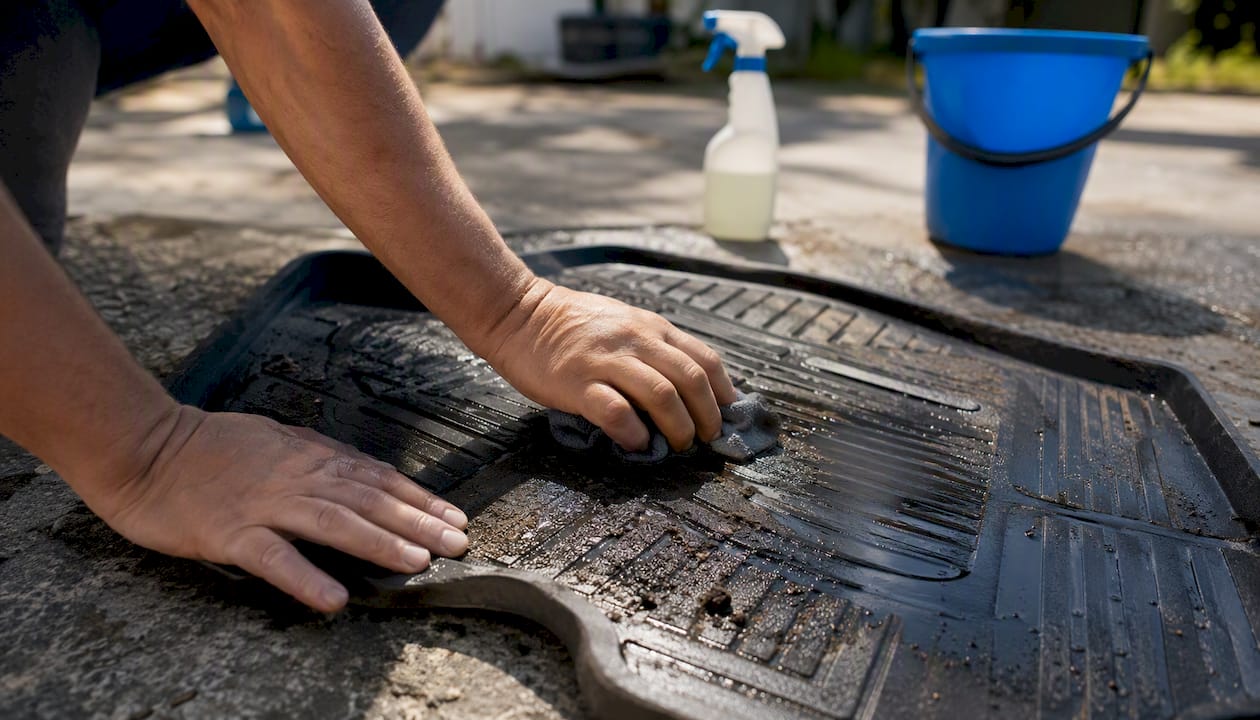
The core rule: hose and air-dry custom all-weather liners after heavy use. Letting mud, salt, or pet debris sit and dry on the mat surface allows grit to work into the texture and abrade both the mat and the factory carpet underneath over time.
Routine cleaning steps:
- Remove mats from the vehicle and shake out loose debris
- Rinse with a garden hose; all-weather liners typically clean in under a minute with a direct water stream
- For stubborn mud or salt residue, use a mild soap and a soft-bristle brush
- Rinse thoroughly and allow to air-dry completely before reinstalling
- Avoid harsh solvents, bleach, or petroleum-based cleaners; these degrade TPE and TPO compounds and can cause edge curling or surface cracking over time
Seasonal and storage tips:
- When swapping to carpet mats for summer, store all-weather liners flat or rolled loosely; avoid folding, which can crease and weaken edge walls
- Keep stored mats away from prolonged direct sunlight; UV exposure accelerates material degradation and can cause color fading and brittleness
- Inspect retention grommets and nibs at each seasonal swap; replace any that show cracking or deformation before reinstalling
For owners who want to maintain the vehicle’s interior surfaces alongside the mats, anti-slip surface care practices used in automotive coating maintenance offer useful parallels for preserving texture and grip on liner surfaces.
Why Smartliner-usa is the recommended choice for most 4Runner owners
Smartliner-usa custom-fit all-weather liners earn the top recommendation because they deliver the four attributes that matter most for 4Runner owners: scan-verified fit across multiple model-year and seating configurations, TPE-grade material performance, high containment walls, and retention hardware confirmed compatible with Toyota’s factory anchor system.
Key product features:
- Fit options: Dedicated SKUs for 2010–2012 (5-passenger without sliding tray), 2010–2012 (7-passenger with 3rd-row seats), 2013–2024 (5-passenger with sliding rear tray), and 2013–2019 (5-passenger without sliding tray)
- Material: 100% recyclable all-weather compound with non-porous surface and low-odor profile
- Containment: Raised perimeter walls with full dead-pedal coverage on the driver side
- Retention: Grommet-based system compatible with Toyota factory floor hooks
- Warranty: Stated warranty coverage backed by customer service support for fit questions
- Owner feedback: Buyers consistently highlight durability across multiple seasons, ease of removal and cleaning, and precise fit with no trimming required
Statistic callout: Industry guidance confirms that custom-fit all-weather liners preserve factory carpet and support higher long-term resale value by preventing dirt, salt, and spills from bonding permanently to the carpet beneath — a protection advantage that carpet mats and universal liners cannot replicate.
Pro Tip: Before ordering, cross-reference your 4Runner’s model year, passenger count, and sliding rear tray status against the Smartliner-usa product page to confirm the correct SKU. The sliding tray variant requires a different cargo liner cut than the standard 5-passenger configuration.
The case for getting the fit right the first time
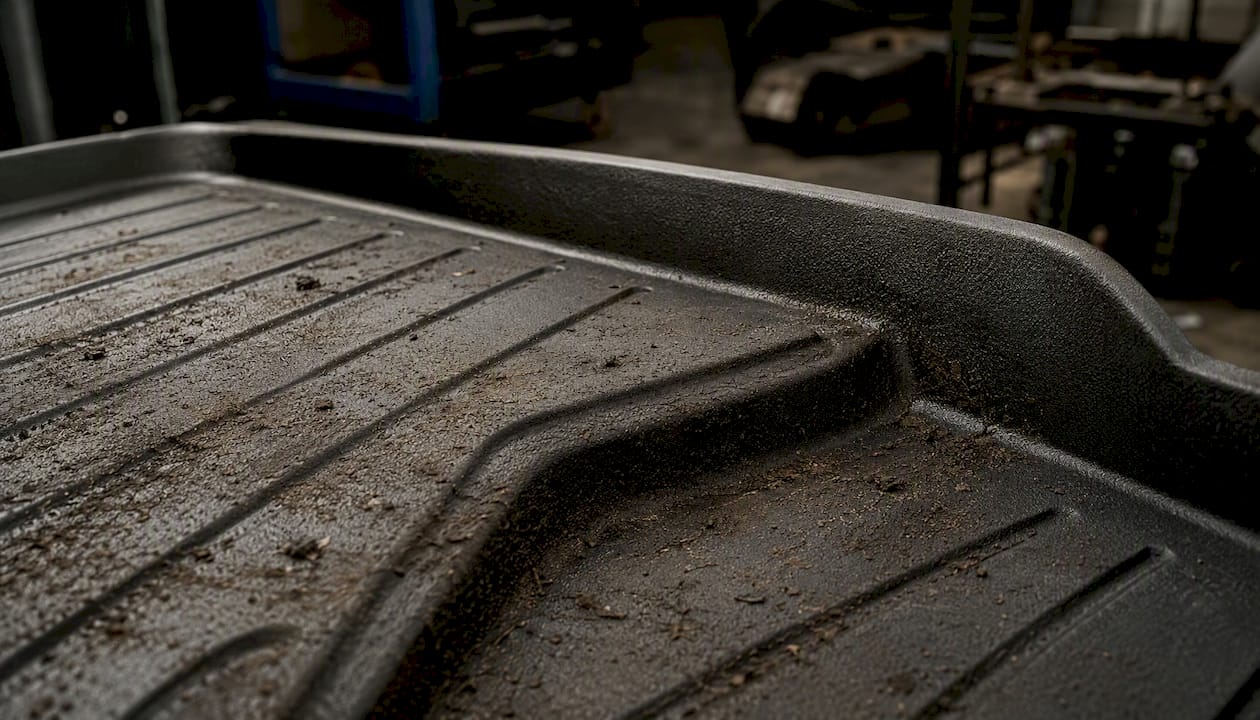
The conventional wisdom in the floor mat category is that brand name is the primary differentiator. It is not. After reviewing owner forum threads, long-term durability reports, and material specifications across the mainstream options, the pattern is clear: fit precision and containment wall height determine real-world satisfaction far more reliably than the logo on the mat.
Owners who buy a premium-priced liner and later discover it does not cover the dead pedal, or that the cargo liner does not account for the sliding rear tray, end up replacing the set anyway. The cost of getting the fit wrong is not just the price of the mat; it is the carpet damage that accumulates in the meantime.
The other underappreciated factor is material longevity under actual 4Runner use conditions. A foam-core mat that feels plush in the showroom will compress and lose edge wall height after a season of muddy boots and gear loading. TPE-grade materials hold their shape and wall profile across years of that kind of use, which is why they have become the standard in serious all-weather liners.
Smartliner-usa’s positioning in this category is straightforward: scan-verified fit, TPE-grade durability, and full-row coverage at a price that does not require a premium-brand premium. For most 4Runner owners, that combination is the practical answer.
Get the right Smartliner-usa liner for your 4Runner
Smartliner-usa offers a direct path to the correct liner for your exact 4Runner configuration. The three-step ordering flow is simple: select your model year and trim, choose your passenger layout (5-passenger or 7-passenger with third-row), and confirm whether your vehicle has the sliding rear tray before checkout. Getting that third step right is the most common point where owners make a SKU error.
Visit Smartliner-usa to find your 4Runner’s specific product page. Warranty coverage and returns are handled directly through the site, and the customer support team can confirm fit questions for any configuration. For owners unsure about their exact trim, the product pages include model-year-specific fitment notes that make verification straightforward.
Sources
- The Most Important Features To Look For In Modern Car Floor Mats
- What Makes A Floor Mat Truly All-Weather - Insights From Real Experts
- Best All-Weather Floor Mats: WeatherTech vs. Alternatives - HiRide
- Custom-Fit vs Universal Floor Mats: Which Should You Buy? | CarMatLab
Recommended
- SMARTLINER Custom Fit Floor Liners For 2013-2026 Toyota 4Runner (5 Passenger Model without Sliding Rear Tray) | Smartliner USA
- SMARTLINER Custom Fit Floor Liners For 2013-2024 Toyota 4Runner (5 Passenger without Sliding Rear Tray) | Smartliner USA
- SMARTLINER Custom Fit Floor Liners For 2013-2026 Toyota 4Runner (7 Passenger with 3rd Row Seats) | Smartliner USA
- SMARTLINER Custom Fit Floor Liners For 2013-2024 Toyota 4Runner (5 Passenger with Sliding Rear Tray) | Smartliner USA